Episode Transcript
[00:00:00] Speaker A: First things first, we have added five new countries enjoying the vault of silliness. Please forgive any mispronunciations. Azlema to Tunisia, Konnichiwa to Japan, Ha Lo to Taiwan, Sawasdi to Thailand and Alan Wassalan to Jordan.
Thank you all for joining us here today. Help leave this world a little sillier than we found it.
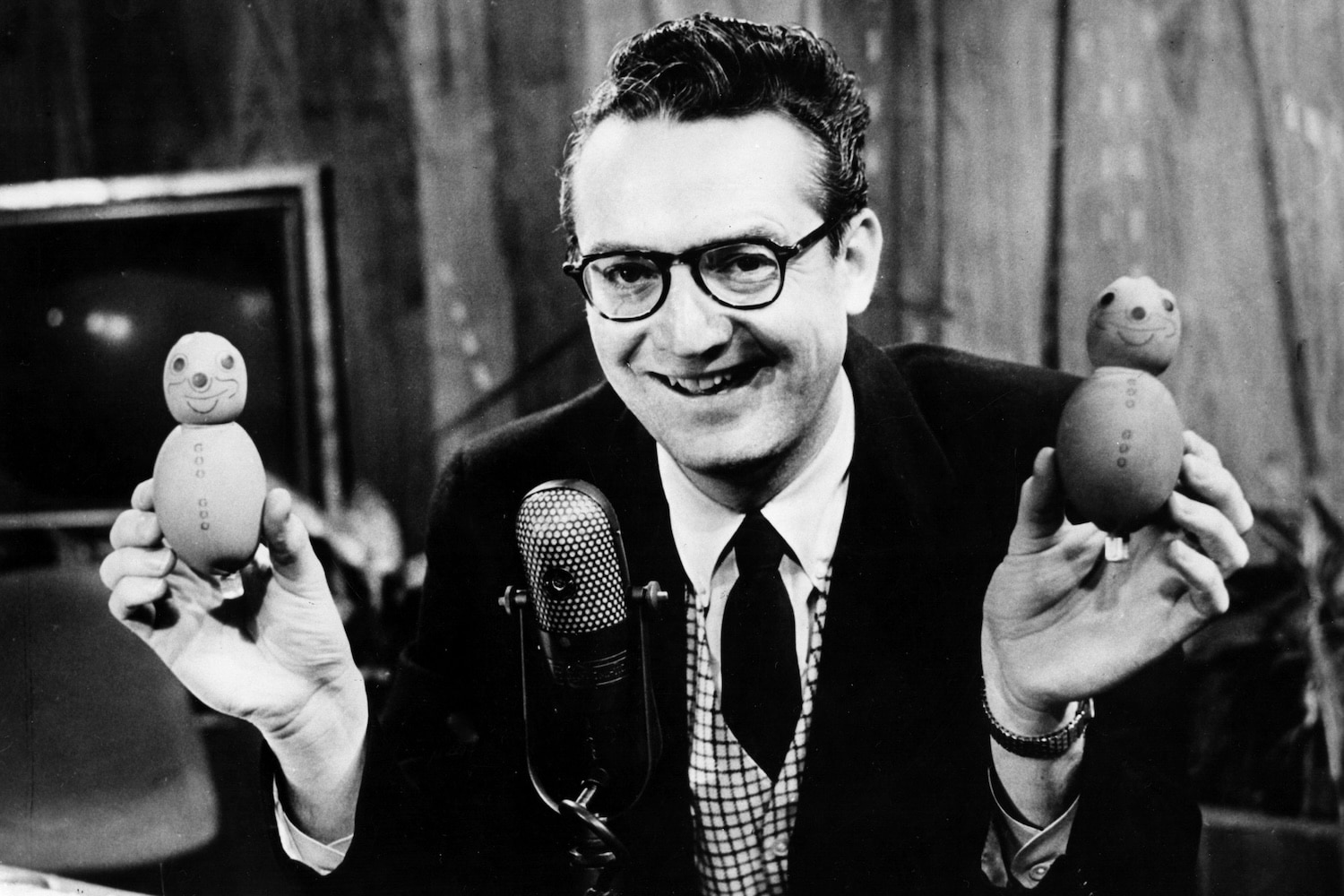
Today you are in for another treat as this is an appearance by the great Steve Allen on Norm Show. This One is from September 2, 1995 and I have titled it Genius on Display.
Steve had written his 44th book, the man who Turned Back the Clock and other Stories. Its focus was on the entertainment biz.
Norm and Steve talked about many subjects as Norm was in his glories again with with one of his favorite guests back on. I will not give you any further info as this needs to be discovered and enjoyed simply by listening for yourselves.
They do take some calls. Darlene in her car who's writing some new vaudeville. Charlie from Drake.
[00:01:09] Speaker B: It.
[00:01:10] Speaker A: Diane trying to become a cartoonist. Larry from Orleans and a caller I won't name because he was a loser.
Episode 303 Genius On Display informs its way to your ears. Now,
[00:01:43] Speaker B: What a treat. I want to get a chance to talk with Steve Allen again and he'll be with us just a bit. He's got his 44th book out now, 44 books. He's written like 5200 songs and 8 million other things.
This one is a book of short stories, one of which is called the man who Turned Back the Clock. And that's the title of the book itself, published by Prometheus Books. Steve Allen, the Man who Turned Back the Clock and other short Stories.
Join me on the show, Steve.
[00:02:12] Speaker C: My pleasure, Norm. It's always good to talk to you. By the way, I couldn't quite make out the name. It was Fudarakisaki Law School. What was the name of it again?
[00:02:21] Speaker B: Oh, a quin.
[00:02:22] Speaker C: How do you spell that?
[00:02:24] Speaker B: Q U, I, N, N, I, P I, A, c.
You win $10. You. Not only that, but you know what? That's an Indian word and it means we love Steve Allen. Did you know that you had an Indian name for that?
[00:02:37] Speaker C: But I'm very big with Indian lawyers.
[00:02:40] Speaker B: And also we love. We love Jane Meadows as well. How long you guys been married now, by the way?
[00:02:45] Speaker C: 41 years.
[00:02:46] Speaker B: No kidding.
[00:02:47] Speaker C: Well, there's been a little of that, but we haven't learned for 21 years.
[00:02:52] Speaker B: Anyway, I loved your new book.
I can't read the books as fast as you can Write them. This is the 44th one, the one
[00:03:01] Speaker C: on short stories called that's what Jane Says.
I guess there was a priest who interviewed me, a Jesuit priest, a few years ago when I was promoting one of the earlier books. And he said, Mr. Allen, I have come to conclude that you have never had an unpublished thought, which is a pretty good line.
[00:03:18] Speaker B: It says, what, 5,200 songs, is that right?
[00:03:22] Speaker C: It's up to 40. I mean, 5,300 now. Yeah, because I write well in August. I don't count them when I write them, I just write the songs. But the people at the office who keep track of all that for the bookkeeping tell me that I wrote 163 songs in August.
[00:03:38] Speaker B: And also you wrote some songs while you were being interviewed.
Was it maybe. Maybe I'm misreading this thing, but you were being interviewed on television or something, and somebody said, can you write a song for us? And you did about six songs while you're on the show.
[00:03:53] Speaker C: Yeah, I did that. Well, I was on a talk show on a new TV talk show with a fellow named Feldman just a week or so ago, and he asked me to write a couple of songs and I did. And then some other show about a month before that, I wrote five or six tunes.
[00:04:09] Speaker D: Yes, it says.
[00:04:13] Speaker B: It says somebody said, could you write something for us right now? So they quoting you. You say, so I wrote something called could you write something for us right now? Which sounds difficult.
[00:04:24] Speaker C: Yeah, that's true. It's not a bad title. Better than Switchblade. Baby, I'm going to stab you tonight.
[00:04:29] Speaker B: You know what I was thinking last time we were talking, and of course it's common knowledge that David Letterman very much inspired by you. And I was thinking, I don't know whether you were inspired by this guy or not, but you remind me a lot of him and you do mention him in this. His name does come up in the book, the new book.
Henry Morgan.
[00:04:50] Speaker C: Oh, yes. No, Henry and I were in the same age bracket, so neither of us influenced the other. But I always liked his work.
[00:04:57] Speaker B: But he was kind of a nut cake like you, too. I mean, if really wild and off the wall. And he was. He was absolutely, absolutely one of my favorites, too. I remember a commercial. In fact, I have it on tape at home.
He introduced the.
What's that?
The click click. The razor blade. Oh, yeah, the.
Oh, the shick. Injector razor. And he's doing his. One of his early radio shows and he says, the chick injector razor. People have decided that they put vitamins in the blade so that in the event you cut yourself, the vitamins go directly into the bloodstream. And I thought nobody maybe except Steve Allen would dare, would dare come up with a line like that.
[00:05:43] Speaker C: It's a funny line.
[00:05:45] Speaker B: No, and he's got some guy, you know, working to show how quickly you can shave with a Shick injector razor. And afterwards he says, how do you feel? And the guy says, bloody. I mean, can you imagine that?
[00:05:56] Speaker D: Yeah.
[00:05:57] Speaker C: He used to make the sponsors worry quite a bit.
[00:06:00] Speaker B: Did you do that, make them worry too? Because I know you did a lot
[00:06:03] Speaker C: of radio before it got on television. I used to horse around during rehearsals on the TV shows. They would have a perfectly straight commercial on the teleprompter or a cue card and I would read it, but change every line to, you know, make the ushers laugh and the band laugh and so forth. But once we got on the air, I generally gave them their money's worth.
[00:06:22] Speaker B: Now how long, how long did you do radio?
[00:06:25] Speaker C: Well, I got into radio about 1942 or 3ish in Phoenix, Arizona, working for a CBS station there.
And then I moved over to Los Angeles not long thereafter and worked in 44 to 1950.
[00:06:42] Speaker B: Okay. Now you, you've in your books you've covered just about everything you can cover. Well, maybe not everything you can cover. I don't know that you talked about, I don't know, technical stuff, how to make a clock or something like that.
Anything that I'm interested in you wrote about.
[00:07:00] Speaker C: Well, thank you, Norm. Yeah, that first story in the book, which is titled the Sunday Morning Shift is autobiographical, that actually happened to me. I witnessed the event anyway because I was the new man on the staff. When I came out of college in Arizona, I got the least desirable duty. And that meant I had to get up about 4:30 in the morning and open the station up at 6 on Sunday morning and then introduce a series of clergymen who had their 30 minute fundraisers going on all morning.
And I won't go into the whole story at this point, but as I say, that was a true story.
[00:07:36] Speaker B: No, the interesting thing is you talk about this clergyman who was talking about this is going to be my last broadcast, you know, unless you, unless I get some more money. And you had only been there apparently a short time and somebody on the staff said this guy does this about every six months or a year or something.
[00:07:52] Speaker C: Yeah, that's part of the story.
[00:07:54] Speaker B: Keep stashing up this. No, we've all been through that kind of Stuff. I. I worked at a station which had Sunday morning broadcast like that, including a guy who played the theremin. Are you familiar with the theremin?
[00:08:06] Speaker C: Oh, yes. I take three of them every morning. No, seriously.
I remember I actually had the man who invented it on my radio shows in the 1940s. His instrument, which worked with some kind of a oscillating principle, he would move his hands near a pole that was upright and sound waves would go up a little, like a siren, up and down. And it was used in a number of motion pictures because it gave an eerie, spooky sound.
[00:08:34] Speaker B: The Spellbound was one of them.
[00:08:35] Speaker C: Yes, right.
B, O, U, N, D. That's. I'll be happy to spell anything, whatever you want.
[00:08:41] Speaker B: Yeah. No, we had a guy. Guy who played that. We had used to have to drag his theremin, incidentally. The guy who invented it was named Theremin. I didn't realize there was such a person.
[00:08:50] Speaker C: I've forgotten that.
[00:08:51] Speaker B: Yeah, Theremin invented the name. The instrument that was named after.
[00:08:55] Speaker C: Yeah, he invented the theremin.
[00:08:57] Speaker E: The.
[00:08:57] Speaker C: The Zywald and the Tr. Many weird instruments.
[00:09:01] Speaker B: We used to have to carry this damn thing up a whole flight of stairs on a hot summer day because the guy who played it. H. Whipple Abbott. Does that not sound like a theremin player?
He didn't want to do that because it would tie up his fingers or, you know, stiffen them up, and he couldn't. But it had two pipes you were mentioning. There was one that was vertical and one that was horizontal, and one was for volume and one was for pitch.
[00:09:28] Speaker C: I see.
[00:09:28] Speaker B: So it's kind of weird because it was the vibrations in your body and you kind of wave them back. Really weird looking thing.
[00:09:36] Speaker C: It's a nice instrument to play if you don't want to leave fingerprints.
[00:09:42] Speaker B: I so admire you coming up with lines like that because I consider myself really tremendously clever, and I don't come close to what you can do. But a lot of these stories are really fascinating.
You have one. I've forgotten the title of it, but it has an unusual twist in the sense that it's the story of a man who has killed somebody who's admitted he's killed a child and he's broken out of jail, and there's a. There's a posse after him, like a lynch mob. And the twist is at the end, you kind of assume that this guy is black. I don't know why. Maybe those are our. Our prejudices and that the lynch mob is composed of whites, but it's just the Opposite.
[00:10:26] Speaker C: Yeah.
[00:10:27] Speaker B: And you don't. You don't. You don't reveal that till the very last paragraph.
[00:10:30] Speaker C: Well, now, you pulled another good story ending, Norm.
[00:10:33] Speaker B: I'm sorry. I'm sorry.
[00:10:35] Speaker C: It's okay. I'm kidding.
[00:10:36] Speaker B: No, but a lot of the. You remind me of John Cheevers. Do you read much of his. Have you read much of his short stories?
[00:10:43] Speaker C: I did, about 30 years ago. Yeah. He's a marvelous writer of short stories.
I can't recall anything specifically now at
[00:10:51] Speaker B: this late date, but they. But they were slices of life kind of thing. They were, as yours are, descriptions of interesting people and situations and that kind of stuff. It was fun to read.
[00:11:05] Speaker C: Well, thank you.
[00:11:06] Speaker B: Like you had one called the Day the Jews Disappeared. Being Jewish myself, I kind of was interested in that.
And you point out that the country falls apart.
Yeah, not only the country falls apart and it ends up with a nuclear war and the whole world falls apart
[00:11:26] Speaker C: as a result of that.
[00:11:27] Speaker B: Because now, the point of that was.
[00:11:31] Speaker C: Well, the point of it is to dramatize the absurdity of antisemitism.
If a Jew or a Catholic or a midget or a Republican anybody hits you on the head with a stick it's perfectly reasonable to be very angry at that individual offender. But let's say he's a midget. But if, as a result of that encounter, you thereafter hate all midgets, you're an idiot. And that's the sort of. The point of the story.
[00:11:57] Speaker B: Yeah. And you also mentioned we mustn't allow anything to become extinct because every part of our society is composed of things that we really need.
Am I exaggerating a little bit of what you.
[00:12:10] Speaker C: No, you're distorting.
[00:12:13] Speaker B: I like.
[00:12:14] Speaker C: No, we all do need each other. It works out better that way.
[00:12:17] Speaker B: Okay. And the title, the man who Turned Back the Clock sort of brings up some of the things that you're not too terribly happy with that have gone on in the entertainment business and all that over the past several years.
[00:12:31] Speaker C: Yeah. It plays with that fantasy which everyone has entertained at one time or another and is actually an ancient literary concern.
And that is, oh, boy, if I had my life to live over again. And they've made motion pictures. Mark Twain wrote a marvelous story, a Connecticut Yankee and King Arthur's Court.
So, as I say, hundreds of thinkers over the centuries have toyed with that idea.
And a common thread of that is, hey, wow, if I could just get back about 33 years, I could become the richest man on Earth because I would know which stocks were about to go up, I'd know which fads were going to be big. I'd know which stars, and you could indeed become enormously wealthy. So that's the motivation that drives the character in my story. And he positions himself in time just a few weeks before some big fads that did indeed greatly impress the country.
One of them, for example, is the Hula Hoop.
So he has a plastic manufacturer make him this little hoop about four feet in diameter, and it's bright pink. And he gets an appointment with the head of Mattel Toys, and he goes into the man's office at the appointed time and says he has this marvelous idea.
Now, in reality, the Hula Hoop, as you know, made scores of billions of dollars. It was an enormous hit.
And so the president says, what do you have in mind, sir? He says, well, I have this new toy. And he says, where is. He says, right here. He says, you mean that round thing there? He says, yes. He said, what is it?
He said, it's a hula Hoop.
I said, what's a hoop got to do with the hula? I don't understand what we're talking about here. What do you do with it? And the guy says, well, you just put it around your waist, and then you do the hula, and they throw it right out of the office.
So a lot of things that have become big became big, not because they were great, but despite the fact that they were kind of stupid.
[00:14:19] Speaker B: A lot of the stories you have anywhere, maybe all of them, are delightful to read. I thoroughly enjoyed that.
Over what period of time did you write these short stories?
[00:14:31] Speaker C: Well, some of them go back 30 or more years, and others were written in recent weeks and months.
I continue to write short stories. This is the fourth collection of my stories that's been published, and almost all the books in the world, as you know, are out of print. Generally within a few years after they're published, they print up 30 or 40,000 copies. And after they sell them, in most cases, they don't bother to go back and print up a second edition.
So you'd have to have bookstores that were a block long and a block wide to store everything.
So I'm constantly hearing over the years, where can I get a copy of one of your short stories about the so and so or the other story?
So from time to time, every eight or 10 years, we gather a bunch of stories together that have been published, and I add a bunch of new ones, and they bring out another edition.
[00:15:22] Speaker B: What kind of getting to music now, because you play Awfully good piano. And you've written a lot of great things. I think obviously everybody points to this could be the start of something big.
But the key song that you wrote,
[00:15:38] Speaker C: it's the best known one yet.
[00:15:40] Speaker B: What about the music of now? And let me ask you that, I want to ask you about comics of today because I mentioned the one comic that this was the golden age of comedy. But as I've thought about it again, I don't think that's true at all. I said that because there were so many comedy workshops and things and at one time there was not. And so there are so many places where comic can begin.
But most comics really are not terribly funny. I've come to that wild conclusion. You notice that you watch them up against a brick wall.
[00:16:13] Speaker D: Yeah.
[00:16:14] Speaker B: And it's. They all begin to look alike after a while and say the same kind of nothing kind of jokes. Yeah.
[00:16:20] Speaker C: A lot of the young comics unfortunately fall into pretty recognizable categories. There's always something unique about each individual human being, for that matter, comedian or other things. But they have a tendency now to influence each other or if they see David Letterman successful, they begin to try to talk like him or at other stages of development to Steve Martin or Woody Allen or Donald Duck or whoever they think is funny. And that's unfortunate. There's no way you can avoid being influenced by those that come before you. That's true. Whether you're an athlete, a nuclear scientist or whatever, you should be familiar with your field. And as the old saying goes, we stand on the shoulders of giants who came before us. But there always must be something individual about you so that you're not simply copying Jackie Gleason or Mickey Mouse or whoever.
Because you're not the real thing. You're a copy if you do that.
[00:17:13] Speaker B: No, I know that it always surprises me because there's one comic after another and after all you don't really care. They don't even make you laugh.
[00:17:21] Speaker C: Another negative thing about the present stand up picture and sketch comedy too for that matter, is the incredible revolting degree of reliance on filthy.
On every disgusting subject matter you can imagine.
That's always been an unhappy part of human nature. So this is not totally unprecedented in social history.
But just to you mentioned the golden age, which most people mean the 1950s. And nobody did dirty material on television or radio or in films then, nor did they want to. We simply laughed at those great old silent screen comedians of the 20s and 30s and. And in the 50s we laughed at Sid Caesar and Jackie Gleason and Red Skelton and other great comedians.
And there was no demand for filth. And it worked out very well, much better than the present situation in which it doesn't matter to me at my age what I hear. I've heard it before and I can live through it, but I don't want my grandchildren, dammit, listening to that garbage.
And believe it or not, I'm not alone within Chopin's dispute in fitting this.
I've talked to a lot of professional comedians who agree with me.
And some of them, even some of the young ones, have said, you're absolutely right, there shouldn't be all this filth. But put yourself in my place. I'm working at a comedy club Tuesday night. I'm one of nine comics. The first six guys get up and do filth. And by the time I get up and try to do clean stuff, the audience is worn out. I don't get many laughs.
[00:18:53] Speaker B: I think that's a cop out. That doesn't make any sense.
Doesn't it seem to you that the reason you do filth is because you can't think of anything clever?
[00:19:01] Speaker C: That's straight in most cases. You're right, there are some exceptions of people who are a very talented and still choose to work dirty. I don't understand that at all, because they don't need it. But you're right, there are many young comics who wouldn't get any laughs at all if they didn't get the shock laughs of talking about women's body parts and toilet paper and a lot of other marvelous things like that.
[00:19:23] Speaker B: Because I'm thinking of Lenny Bruce, who kind of worked dirty to a point, but he had some.
The main point of his stuff was not dirty. It was.
[00:19:33] Speaker C: I thought, you're absolutely right, he didn't work dirty the way they do today at all. Today they just say any disgusting thing, as I say, just to get a shock laugh. Lenny never did that. He was a true comic philosopher. And sometimes he would use a four letter word, but it was never just for the cheap laugh. It was always on the way to making a philosophical point, an important comment on some social issue, whatever it might be.
So he is not at all to blame for the present degree of garbage language.
[00:20:02] Speaker B: When I say this next state, make this next statement, some people listening, you're going to say, well, Nathan's one of these old guys, you know, what the heck? And he wants to revert back to what used to be and he can't cope with the present. And that really is not true because I consider myself Like I know you have to consider yourself. I miss, I'm a 90s kind of guy.
[00:20:25] Speaker C: Hey, but sure, if you're hip, if you're hip, your age is irrelevant. I know 17 year old squares and some of the hippest people on Earth are 72, you know, so age has some relevance, but it's not the deciding factor as to whatever a man might be.
[00:20:41] Speaker B: I mention that because I cannot imagine why you're not on television on a regular basis. Now, I don't know whether you're going to shy away from this or not, but I watch Conan o', Brien, for example. He doesn't come close to what you can do. I mean, he doesn't even touch on it. Why is he there and you're not there?
That's a silly question.
[00:21:04] Speaker C: The reason probably is that the people who program the networks and decide what shows will go on or will come off for that matter, are convinced that today's young audience, that's the audience from say 17 to about 38 or so, wants to watch young people.
They may be right about that. If they are, then there's something very dumb about such taste. When I was 20 years old, I love Fred Allen, he was probably 60 then. I didn't say, oh, he's an old guy. I just said he's brilliantly witty.
[00:21:37] Speaker B: Yes, and I was laugh.
[00:21:38] Speaker C: When I was nine years old, I was laughing at Laurel and Hardy who were probably 40 years old then. I still laugh at them as much as I ever did. So this idea that if you're talking about music or comedy or movies or whatever art form, only young people can hack it and or people should get off the bus, that is a kind of a mass stupidity, unfortunately. I work constantly. I work seven days a week. I'm always out performing and I'm on television every few days on somebody else's program. But I know what you're talking about.
[00:22:07] Speaker B: No, well, I don't really subscribe to that business, that young people only want to see young people. Young people want to see talented people.
[00:22:16] Speaker C: I'm sure many of them do. But my point is that the guys who decide who will host a talk show really have a it's called gray listing in the business. It applies to comedy writers. I know some comedy writers who are, let's say 65 and they are the best at writing great big strong jokes and sketches. They are almost unhirable on the average sitcom. They'll take some kid out of college who shows promise and he will get hired just because he's a kid before a 40 year veteran of the joke wars.
[00:22:47] Speaker B: What do you think about sitcoms? Are there are any that you favor now that you think are really funny?
[00:22:52] Speaker C: Yeah, there's a lot of great ones.
The Paul Reiser show, Mad about you, is it called? That's very clever stuff.
The Seinfeld show is wonderfully done. Friends, Wings.
Every year, no matter where you put the dipstick in the history of television, there are always a few marvelous sitcoms.
If you look over the last 50 years of TV, of course there's much more garbage than there is great stuff.
But the real sad factor is that some of that garbage is in the top 10.
[00:23:25] Speaker B: I know, that's the part that really bothers me most of all.
[00:23:28] Speaker C: But to be specific, I think Married with Children, there's not only a rotten show, I think it's an insult to society.
And yet there are people who prefer that to a sophisticated, witty situation comedy.
[00:23:41] Speaker B: Married with Children has been going. Has been on the air for about 750 years.
[00:23:45] Speaker C: And you can't have. Probably for 10 years.
[00:23:47] Speaker B: Yeah, yeah. I mean, you can't kill that thing with a stick. And it highlights the absolute stupidity and boring qualities of some really ugly, dumb. I'm really raging on here. But anyway, what I'm saying is, I agree with you. I think it's got to be one of the worst there is, the fact that that's still going on.
What does that mean?
[00:24:10] Speaker C: I hate to think it means, Norm, that there are people who prefer garbage. It's quite simple. You see it in Reflected in Music, the name Cole Porter, Jerome Kern, Irving Berlin, Johnny Mercer, Duke Ellington. Those names mean almost nothing to some of today's music and record buyers.
They actually, sometimes when I speak on this, either in my comedy concerts or lectures or anytime I say, look, let's not make this a generational difference here. Let me put it very clearly to you. Rhapsody in Blue is better than, as I said before, Switchblade, baby, I'm going to stab you tonight. We're not just talking about taste here. We're talking about better, superior and inferior.
[00:24:51] Speaker B: No, that's right.
When I was talking about. In terms of people who look at you and say, well, he's old, he's not with it. He doesn't know what's going on. It. It has nothing whatever to do with that. It has to do with good or bad, basically that.
[00:25:03] Speaker C: Of course, of course, yeah.
[00:25:05] Speaker D: Can we.
[00:25:06] Speaker B: I wanted to take a break now because I got the. These terrible commercials I got to get rid of. I'd rather talk with you, but I got to do them.
Would you be willing to take some phone calls? Would that be okay with you?
[00:25:16] Speaker C: Oh, yeah, I'll take some phone calls. Some aspirin. I'll take anything.
[00:25:20] Speaker B: Anyway, we're talking with Steve Allen. And our phone number, if you'd like to talk with Steve. And I call him Steve because I like to think of him as an old friend because we've talked two or three times through the years. IS617 is the area code. The Boston 2, 5, 4, 10:30. 2, 5, 4, 10 30. If you want to talk with Steve Allen, I'd love to.
I'm sorry. I'm sorry to have you have to sit there and listen to that stuff, Steve.
[00:25:46] Speaker C: Oh, listen, I'm convinced. I'm gonna go right out in the kitchen, put a spoonful of baby Gold Bond in my Ovaltine. Nice evening.
[00:25:54] Speaker B: Okay.
And anyway, everybody in the in the world wants to talk to you. I have to ask you one question.
Well, we're talking about music and stuff.
Do you still. You still buy records and things? And, and who.
[00:26:07] Speaker C: Who do you buy?
[00:26:08] Speaker B: What. What performers do you like?
[00:26:09] Speaker C: Most of my purchases are jazz, although I recently acquired three beautiful cassettes with all classical music. I love beauty. I don't care whether it's, you know, the beauty of a peach sitting in the window in the sunshine or a symphony orchestra or the Count Basie band at two in the morning. If it's great, if it's beautiful, I love it. If it's ugly and sometimes purposely ugly, I'd have to be pretty weird person, I think, to like that.
[00:26:34] Speaker B: Yeah. Okay, let's take some calls. This is Darlene, who's in her car somewhere. Darlene, hi. You're on. Hi, WBZ with Steve Allen.
[00:26:43] Speaker E: Hi.
[00:26:43] Speaker C: Hi, Darlene. How's your car?
[00:26:46] Speaker E: I'm doing good. I'm calling because I'd like to know what you think about vaudeville coming back. Because I'm in the process of writing a show, but I'm bringing back into it the old vaudeville skits, the courtroom scene and things like that.
[00:26:58] Speaker C: I think it's a marvelous idea. Those sketches were classics, and if you can get funny people to act them, you should have a good success.
[00:27:06] Speaker E: You think it'd work today, though, in this, Mark?
[00:27:08] Speaker C: I really do. Because first of all, the old timers will love it because here it comes again. And the people who never saw it before will take it as something new and therefore like it for that reason as well as its underlying excellence.
[00:27:21] Speaker E: But how would I be able to attract the Younger people, I mean they're
[00:27:23] Speaker C: so used to seeing well that that you never know. A lot of garbage becomes commercially popular and some great symphonies were not appreciated until three centuries after they were written. So you can never predict the marketplace, but just work it through a comedy club or any regular theater.
[00:27:39] Speaker E: Right.
[00:27:39] Speaker C: And if the excellence is there and you get a little help from the media, let's, you know, let people know that it's at a certain theater or club, you'll probably have good luck.
[00:27:48] Speaker E: I mean, I think it's really funny and the more research I do and the more I, I introduce it to the young actors, they're really getting interested in it as well. Oh sure, it's a lot of stuff they've never seen before, but yet there's some stuff that's going on nowadays. It's almost all the same jokes, but it's in different text.
[00:28:03] Speaker C: There's a company record company called RINO R H I N O and I recently helped them bring out a record. It is sort of a history of at least recorded comedy. And they have some great old classic sketches. Abbott and Costello's who's on first for example.
[00:28:17] Speaker E: Exactly.
[00:28:18] Speaker C: Funny is funny. We don't say that. I'm not going to laugh at Laurel and Hardy anymore because they did their picture 65 years ago. We just laugh our heads off.
[00:28:26] Speaker E: I know, but I wonder if times have changed and changed same as film has changed and people may be desensitized.
[00:28:33] Speaker C: Yes, there are things that no longer seem right. For example, you show any the of adult pictures of himself in the 60s and he laughs his head off because the sideburns look so stupid and the hair looks stupid, so taste of that sort. Fat tastes do change, but quality doesn't change that much. And again, Laurel and Hardy or Charlie Chaplin or W.C. fields are a perfect example. They're all so old that they're dead. But there's nothing funnier than what they did that's coming down today.
[00:28:58] Speaker E: Well, why do you think they don't use the variety show on TV as much anymore as they used to be?
[00:29:02] Speaker C: Purely for the the ratings problem. Variety, as you know, was popular in the 50s and 60s and after that 20 year run it it, they kept trying it. They tried it with Dick Clark, they tried it with Howard Cassel and the shows got good reviews, but the ratings weren't there. It's that simple.
[00:29:21] Speaker E: Well, I think it's time again.
[00:29:23] Speaker C: Yes, I agree with you.
[00:29:24] Speaker E: I'm going to give it my best shot. We're going to be opening it in Boston somewhere. We're just going to. To be working on it and I, I just have a good sense about it.
[00:29:30] Speaker B: Keep in touch with us, would you, Darlene, and let me know where you're going to be playing the show and you know, what's happening with it, because I'd love to. I'd love to keep track of it. Okay, great.
[00:29:41] Speaker E: Thanks a lot, guys.
[00:29:42] Speaker B: Thanks a lot for calling.
[00:29:43] Speaker E: All righty.
[00:29:43] Speaker B: Bye.
[00:29:44] Speaker D: Bye.
[00:29:44] Speaker B: You know, it's interesting. You talk about, you know, what is funny is funny. I was listening to tapes of old Jack, many shows and Fred Allen shows that go back maybe 50, 60 years.
They are hilarious. Absolutely hilarious. There's one line by, by, by Fred Allen where he says, he talks about a town in the coast of Maine. And I've said this line so much because it's one of my favorite one liners. He says the town this, the seacoast town is so boring that one day the tide went out and never bothered to come back in again.
[00:30:22] Speaker C: Yeah, that's typical Fred Allen. One of my favorite jokes of his is a quite poetic imagery to it. He's talking about that thing that you see in old cornfields called the scarecrow. You know, the statue of a man made out of raggedy clothes with a straw face and stuff.
[00:30:38] Speaker D: Yeah.
[00:30:39] Speaker C: And he says this scarecrow was so scary, of course it scared the crows, but it scared them so badly they brought back corn they had stolen two years earlier.
[00:30:48] Speaker B: I know, and I love that. I'd forgotten about that. That's such a great line.
[00:30:52] Speaker C: Oh, yeah, beautiful joke.
[00:30:54] Speaker D: Yeah.
[00:30:54] Speaker B: He would talk about, and he was one of the first to, you know, criticize the upper echelon in NBC, the network that he was on for so long. He said, he said, he talked about an NBC vice president. He's always doing jokes about them. He said this guy, his job was to come. When he came in the morning, he, there was a molehill on his desk. His job was to make it a mountain before he got through at 5.
Oh, he was, he was. It's kind of funny. I was thinking about again about the people now who criticize their bosses and you think, why aren't they brave? This guy was doing it way back then.
[00:31:28] Speaker C: Oh, of course.
[00:31:30] Speaker B: I tell you, you guys are okay. I said that because you're from, you're from my generation. That which is. Which is okay. Here's Charlie, who was in Dr. Take it. Charlie, you're on WBZ with Steve Allen. Hi.
[00:31:41] Speaker D: Thank you. Hi, Norm. Steve, just let me say this. We have a fellow in The Boston area, who's a great talent and a great humanitarian. And that's Norm Nathan, because I'll tell you why, as a talk radio goes, he doesn't use profanity. He doesn't hang up on his listeners. I mean, his callers, when they call up. And he treats radio, I think, the way it should be treated.
[00:32:03] Speaker B: Norm, I think you deserve a. Oh, God, stop it. Stop it, Charlie, stop it.
[00:32:08] Speaker C: But let me say this.
[00:32:10] Speaker D: I'm 47 years young. I can remember in the early 50s staying up later than I was supposed to, to watch. To watch your shows. And then I sort of grew up with television, I guess, being, you know, at my age. And I would watch you. And tonight I was watching a little bit of David Letterman. He's doing a car phone routine. I'm saying that's the man on the street that was signed by Steve Allen.
[00:32:36] Speaker C: David's been very good about that.
He's done literally dozens of my routines and jokes over the years. But he concedes that himself. And when he gets interviewed, he often brings up my name. He used to watch one of my late night shows when he was going to school, college, and he said frankly that he wanted to get into television and do that kind of a show.
And he does it, he does it very well.
[00:32:56] Speaker D: Steve, my question to you though is in the routines that you were doing, it seemed a lot of it was ad lib and it seemed like you had a joke within a joke. You would do a routine if you were doing the angry reporter letters to the editor. Yeah, and I'm laughing now because I'm recalling some of them.
But you seem to, as it was going on, that there was chaos but you had control of it. How did you do that? We're talking live tv.
[00:33:25] Speaker C: Well, it's just sort of my natural style. I had the good fortune to grow up in a funny family. The Donahue's. We lived in Chicago and my mother was once called by Milton Berle, who worked with her in vaudeville, the funniest woman in vaudeville. And all the members of her family were witty, sort of a low key, size of the mouth, Irish witness.
So I just talked like the family. I didn't even know I was funny till I got out of the home and I noticed I was the only kid in fifth grade getting laughs, you know.
[00:33:54] Speaker D: Let me say that one other question, if I may know. I know that.
[00:33:58] Speaker B: No, go ahead. Sure, it's okay.
[00:34:00] Speaker D: Are they in Lelands now? With cable TV and 8,000 stations on somewhere? The honeymooners are.
Have they done late night, your late night shows on le.
[00:34:13] Speaker C: Well, there hasn't been much repeating of talk shows by anybody, but I did a primetime comedy series for five years on the network and, and just within the last couple of years, the Comedy Central cable channel has run a two year stretch of that. And that'll be happening in the future too, that old stuff. In fact, I've got letters from young people who say, you know, this is funnier than what the young comics are doing today.
[00:34:39] Speaker D: You know, one other thing.
[00:34:41] Speaker C: I teach high school.
[00:34:42] Speaker D: Stephen.
[00:34:42] Speaker C: Oh, good for you.
[00:34:43] Speaker D: And I get my classroom and my style is a commie style. And I try out your routine sometimes with my kids.
[00:34:52] Speaker C: I think a lot of teachers are
[00:34:54] Speaker D: frustrated actors or comedians. Sure.
[00:34:56] Speaker C: Well, you are performing. You're performing in front of 40 or 50 people and that's your audience.
[00:35:01] Speaker D: And you know, let me say, a person like yourself being on, on this planet, you have made a difference to
[00:35:05] Speaker C: a lot of people.
[00:35:06] Speaker D: I just wish my two teenage children could have seen the quality TV that was there. They catch some of the snippets of the Honeymooners and stuff like that, but their attention span, unfortunately, is more towards the other stuff. And I tell them what they've missed and hopefully they will be introduced to this at a later date. My oldest son now is in college and he's starting to get into what culture is really all about. And I think now he's starting to see an appreciation for the arts. As they should be, I believe.
[00:35:38] Speaker C: Well, thank you. What's your first name?
[00:35:40] Speaker D: Charlie.
[00:35:40] Speaker C: Charlie, There's a book I did a few years ago called Dump D O M B T H and 81 Ways to Make Americans Smarter. The reason I mention this here is that a lot of teachers, high school and university teachers, have written to tell me that they are using that in your. In their classes. Sometimes they make it required reading or sometimes just read excerpts to the class.
And it's, it's a hip and funny book and yet it has to do with the collapse of intelligence itself in the American mind. So it might be of some use to you and your students.
[00:36:09] Speaker D: I appreciate it. I will get a hold of a copy. Thank you very much. Steve Norman. Have a good night. Thank you.
[00:36:13] Speaker B: You too, Charlie. Thanks for calling. Yeah, you're, you're a lot of, a lot of things you've written. Because I've read quite a few of your books and one you do on comics and you talk about Woody Allen and you compared him, and this is the first time I ever seen anybody compare him to this guy, because I always, I always, I always thought especially his New York pieces, a New Yorker pieces rather were very much like S.J. perlman. He doesn't, his vocabulary isn't quite as wild as that.
[00:36:42] Speaker C: Woody has a fascination with words and there are elements of Perlman in his work, which is the greatest compliment I can pay him.
[00:36:49] Speaker B: I know when I read your book and you were comparing him with him, I thought, yeah, yeah, you know, I, I kind of figured maybe I was the only one who noticed that. Obviously I was not.
[00:36:59] Speaker C: Yeah.
Perlman, of course was, was a writer, not a performer. But there is a great literary thread to, to much of Woody's best work. He's a fine writer too. If he never performed or directed films, he would be appreciated as the fine. A literary humorist he is.
[00:37:15] Speaker B: Just a little, I'm sorry to do this, but just another little break, Steve, and then we, we'll, we'll pick up a couple of more phone calls.
[00:37:21] Speaker D: Okay? Okay.
[00:37:22] Speaker B: On the Air with Steve Allen here on WBZ.
[00:37:25] Speaker E: Oh, good evening. Thank you so much. Hi, Mr. Allen, it's such a pleasure to speak to you. I'm a 60 year old woman and I'm trying to become a cartoonist.
[00:37:38] Speaker D: Hmm.
[00:37:40] Speaker E: It's rather late, I understand.
Most of my working life of 44 years has really been disastrous and I've been very unhappy. And finally the awakening came.
What I really would like from you perhaps is just a few words of encouragement because when I take a few classes, which I'm doing now at night, of course, I'm the oldest person in there and I'm having a bit of a self esteem problem to stick with it because I have really no one to encourage me as a family. But I really want to do this. Do you think you could give me a few words?
[00:38:21] Speaker C: Well, I could give you some words, but they would be of doubtful relevance. I wish I knew more about that particular field than I do.
One thing that immediately occurs, of course, is the question as to what kind of cartoon do you do?
Do you do individual cartoons of the New Yorker type or do you specialize in comic strip development?
Do you do caricatures?
And unless one knows that, then really advice would be almost meaningless.
I've written two books that are really how to instruction books as regards comedy generally.
One is called how to be Funny and the other is called Make Em Laugh. And there's a section I think, in both in which I refer to cartoons. I've created a number of cartoons myself, which is to say I create the concept, I write the Dialogue and then I have to get an artist to do the artwork so that there are some. There's some information in that, those chapters about where to submit your cartoons and what kind of money you might expect and so forth.
But if you're really good at anything, generally you can find your way into the marketplace, right?
[00:39:29] Speaker E: And age really shouldn't be a barrier.
[00:39:31] Speaker C: I don't believe it would be. For one thing, when you submit a cartoon, you don't have to say, by the way, I'm 60 years old.
If you're dealing with them on the phone, I'll tell you right now, you sound about 30. You have a very youthful voice.
[00:39:43] Speaker E: Oh, good.
All right. Okay.
[00:39:46] Speaker B: Hey, good luck with you. Keep in touch, Diane.
[00:39:48] Speaker E: All right, thank you so much.
[00:39:49] Speaker C: Thank you.
[00:39:50] Speaker E: Bye.
[00:39:51] Speaker B: Be nice to know that her career started right here and she got to the. Pushed into the career by Steve Allen on the. On wbz. But I'd be so proud of that.
Okay. Larry in Orleans, down on the Cape. How you doing, Larry? You're on with Steve Allen. Hey, Norm.
[00:40:05] Speaker D: Oh, Mr. Allen. Oh, nice to speak with you. Just bear with me, I'm a little nervous.
My goodness.
I like to ask you about music. Are you a self taught?
[00:40:18] Speaker C: If I had to do one syllable answer, yes. This is the best I can come up with, but it has to be qualified. I did take conventional lessons starting when I was, I don't know, seven or eight, but for some reason or other I had trouble with the reading part of it. And yet my gift for composition emerged almost immediately. I was taught Little Simple, Simple 3 and 4 note songs, as all students are at the beginning. Tweedledee and Tweedledum and that sort of thing. And oddly enough, I began immediately to write my own songs of that type.
But again, I don't know whether it was a little touch of dyslexia or whatever, but I had trouble reading, so I do play by ear and do not read music.
[00:40:56] Speaker D: Now I'm a little dyslexic myself. I damn near called you Mr. Anal.
My goodness, have you ever heard him play?
[00:41:04] Speaker C: Norm, who's that?
[00:41:05] Speaker B: Have you, Norm? Have you ever heard him play.
[00:41:08] Speaker C: Oh, I thought you're talking about something.
[00:41:09] Speaker B: Oh, have I ever heard Steve Allen play? Oh, sure, a lot of times he plays very well. Great sex player, yes.
I'm sorry, who are you talking about?
[00:41:18] Speaker D: I said he. He's a great sex player.
[00:41:20] Speaker B: Do you think you'll ever. No, I'm sorry, Steve Allen is a pianist. Now who are you talking about?
[00:41:24] Speaker D: Oh, I'm sorry, I was My next
[00:41:26] Speaker B: question was that, that Neil Farrell flat there.
[00:41:29] Speaker D: I was wondering if you ever get over that.
[00:41:30] Speaker C: Oh, you're talking about Woody Allen.
[00:41:32] Speaker B: Oh, you got that. You got the wrong.
Are you ever going to have Woody on Larry call me another time. He thought he was talking to somebody totally different.
[00:41:41] Speaker C: I can't believe I have booked Woody as a guest on my television show. Yeah, years ago. He plays the clarinet, by the way, not the saxophone.
[00:41:48] Speaker B: Yeah, no, I guess that's right. That's what he was thinking.
Here's, Here's a guy wants to talk about Meeting of the Minds, which was what? One of your really great shows, Phil, in Rhode Island. We only have about a couple of minutes.
[00:42:00] Speaker D: Okay, thanks, Norm.
[00:42:01] Speaker C: Steve, I've been a great admirer of
[00:42:03] Speaker D: yours for many years.
[00:42:04] Speaker C: I think you're one of our great national treasures. Oh, dear. Thank you for thinking that. And I've always remembered the tremendous series
[00:42:12] Speaker D: you did on PBS, meeting of minds
[00:42:14] Speaker C: back in the late 70s.
[00:42:15] Speaker D: And my question, aside from my admiration
[00:42:18] Speaker C: for it, is will you ever revive that again?
[00:42:21] Speaker D: And will it ever.
[00:42:22] Speaker C: I don't know, but it's. It has a vigorous afterlife. It'll be around long after I'm not. It's available in video cassette form. And a company called Dove Audio, which has products in most of the world's bookstores in the audio department, of course, has brought out all 24 of those one hour shows in audio cassette form. So you can listen while you're jogging or cycling or driving to work.
And a company called Prometheus, a book publisher, has brought out a four volume set of the scripts. So if you're trying to remember what it was that Thomas aquinas Said or St. Augustine or Thomas Jefferson or whoever, you can go over the material as slowly as you might wish on the printed page.
[00:43:03] Speaker D: I see.
[00:43:04] Speaker C: Well, that's wonderful. Do you think you'll ever do another series like that again?
If I had to bet, I would think no. Although at the moment the station here in Los Angeles from which we did the shows is trying to crank up a campaign to get other stations to carry it and simply rebroadcast the original 24 shows.
[00:43:23] Speaker D: I see.
[00:43:24] Speaker C: Well, my best of luck to you and I wanted you to know how much I appreciate that wonderful work that you did. Well, thank you so much. And again, as I mentioned to the earlier fellow, the teacher, a lot of high school teachers and college and university people and sometimes all departments are using that.
It's. It's possibly one of the very best educational uses of television in the history of either education or television.
[00:43:49] Speaker B: Oh, the series was brilliant.
[00:43:51] Speaker D: What?
[00:43:52] Speaker B: I hate to ask. I don't really hate to ask. I want to ask you anyway. Could you stay on just a little bit longer? Would that. Am I pushing too much?
[00:43:59] Speaker C: Does 5 minutes do any good? Because I have something else I have to do that.
[00:44:02] Speaker B: Oh, well, guys, because we have five minutes of news coming up, but will you do five minutes after the news?
[00:44:08] Speaker D: Okay.
[00:44:08] Speaker B: Okay. You're wonderful. I know.
[00:44:11] Speaker C: It's.
[00:44:13] Speaker B: Even though I'm an exciting personality, it makes for a very long program.
[00:44:17] Speaker C: No problem, Norm. I've been slipping into my pajamas as we talk, so I'm lying down now.
[00:44:23] Speaker B: You have little feet in your pajamas and everything. I want to know everything about you.
[00:44:27] Speaker C: My little feet are in my pajamas.
[00:44:29] Speaker D: Okay.
[00:44:29] Speaker B: And we had Tony Nesbitt, who's my producer. We figured that you probably wrote about three books during the newscast and about 50 more songs. And of course, the latest book, which is the 44th, is called the man who Turned Back the Clock and other short stories. They're delightful short stories. I really. I really enjoyed them put out by Prometheus Books anyway.
Well, I mean, you could have just a collection of Steve Allen books and you got a whole collection of great books and stuff, which is. Which is nice. As a matter of fact, as a result of one of the promotional announcements that I saw you do on television with the big glasses, remember, you're suggesting people send their glasses to.
[00:45:10] Speaker C: Oh, yes. New Eyes for the Needy is the organization.
[00:45:12] Speaker B: That's right. I jotted down the address and see, because I want to be like you and everything you say I want to do. And I went through my whole house and I dug up about 100 pair. Not 100, about a dozen pairs of glasses that have been last. You know, we hanging around for a long time. And I sent them in.
[00:45:29] Speaker C: And I think everyone who's ever worn glasses has at least three or four old pair of frames around or lenses or not, and they're accomplishing nothing except cluttering your space. So. But they should be sent to New Eyes for the Needy.
[00:45:44] Speaker B: And I'll give the address I have, have all that information.
I'll bring that in over the weekend and mention that people can do that.
Just one other thing, then we'll take one more call, then I'll let you go. And I just don't want to push it too far because I just enjoy you so much. I hate to see you go.
Steve Lavelli, who was on the station just before I came on, said at one time he had seen you and he did an imitation of your laugh at some live show that you had done. He said he doesn't know what. He can do it now, but used to. I, I think of your laugh again with as the same as David Letterman's laugh. Did he copy you? He's got that same, Same high pitch kind of thing.
[00:46:27] Speaker C: Well, yeah. David was greatly influenced too, when he was in college by watching a lot of my shows. Whether he picked up my laugh or
[00:46:34] Speaker B: not, I really haven't noticed because I could do his laugh and I think it's the same as yours. It's, you know, like.
[00:46:43] Speaker C: Yeah, right, I know what you mean. I think all of us have several different laughs, with the most common one, of course, is the ha ha ha, you know, the chuckle. But when I get hysterical, then there's a kind of a wild whooping crane sort of sound.
[00:46:54] Speaker B: Can you do that?
[00:46:56] Speaker C: Well, not on purpose, but it does happen to me now and then.
[00:46:59] Speaker B: Okay, let's just take one call and then I'll say thank you very much and I, I really appreciate you allowing me to impose on you this way. This is Jonathan in Brookline. Jonathan, you're on the air with Steve Allen.
[00:47:12] Speaker D: Hello, Steve. I admire your latest book.
[00:47:14] Speaker C: Oh, thank you, John.
[00:47:16] Speaker D: Really great. It's a piece of crap.
[00:47:20] Speaker B: You serious?
Oh, Jesus. Of all the ones we're gonna close with, we had to do that. Oh, I'm so sorry. And then we had this other jerk who thought you were Woody Allen.
[00:47:30] Speaker C: That's funny.
It takes all kinds. No problem. Anyway, Norm, it's always a pleasure to talk to you, and anytime you want to do it again, just let me know.
[00:47:40] Speaker B: I. I will. How about tomorrow?
[00:47:43] Speaker C: Well, I do have another book coming out. It's a. It's a novel called Murder on the Atlantic, so. And some new albums. So I'll be back about every six weeks.
[00:47:51] Speaker D: Okay.
[00:47:52] Speaker B: I just love talking with you and I'm. I'm. Well, as you can see, most of the people who call or admirers, except the last idiot, but what the heck.
[00:48:00] Speaker C: No, I've never been very big with idiots, so
[00:48:04] Speaker B: that's really great.
[00:48:05] Speaker C: No problem.
[00:48:05] Speaker B: Hey, thank you very, very much. Thanks, Norman.
[00:48:07] Speaker C: I'll talk to you soon.
[00:48:08] Speaker B: Okay, fine. Steve Allen. Thank you.
You can mistake them. Maybe he thought he was Fred Allen too.
Gee, Mr. Allen, I thought you were dead.
[00:48:18] Speaker C: That's right.
[00:48:22] Speaker A: Was that worth the. Listen? It would have been quite a treat to have Steve in studio, but that never came to pass. He was as much a delight on the phone when I spoke to him as he was on the air with the callers. Thank you again to all our new listeners from around the world. Keep liking subscribing and doing all the things you do to help us out here in the vault. There's been some increases on all of them, so we are just so darn thrilled. See you all next week. Closing the vault and accomplishing our goal to leave the world a little sillier than we found it. Four Prometheus Books Quinnipiac, the Indian name for we love Steve Allen College Jane Meadows, Harry Morgan the Schick injector razor dragging your theremin to work H. Whipple Abbott Volume and pitch exaggeration and distortion Common threads hula hoops bookstores comediennes standing on the shoulder of giants the revolting reliance on filth Blech the comic philosopher Lenny Bruce 90s kind of guys 17 year old squares Conan O' Brien hate mass stupidity rage and killing it with a stick Switchblade, baby I'm gonna stab you tonight, baby Goldmont Ovaltine Jazz and classical music Vaudeville Rhino records Fad Taste vs Quality variety shows Broadcast executives making mountains out of molehills Growing up with TV Irish wit making a difference in the world Classic comedies hip and intelligent books S.J. perlman, no Age Barriers Woody Allen Confusion Dove Audio New eyes for the needy having several different laughs, jerk callers, graciousness and two men who were never big with idiots. Steve Allen and Norm Nathan. I'm the one who has always been big with idiots. Tony Nesbitt.
[00:50:22] Speaker B: Are you familiar with the theremin?
[00:50:24] Speaker C: Oh yes. I take three of them every morning.