Episode Transcript
[00:00:00] Speaker A: Welcome back to another exciting episode of Norm Nathan's Vault of Silliness, hosted by the guy you're listening to right now, Tony Nesbitt. Today's episode, which by the way is a Norm Nathan show from June 11, 1995, had some of the ingredients that made Norm's show so great. An entertaining guest and a plethora of calls from our wonderful listeners.
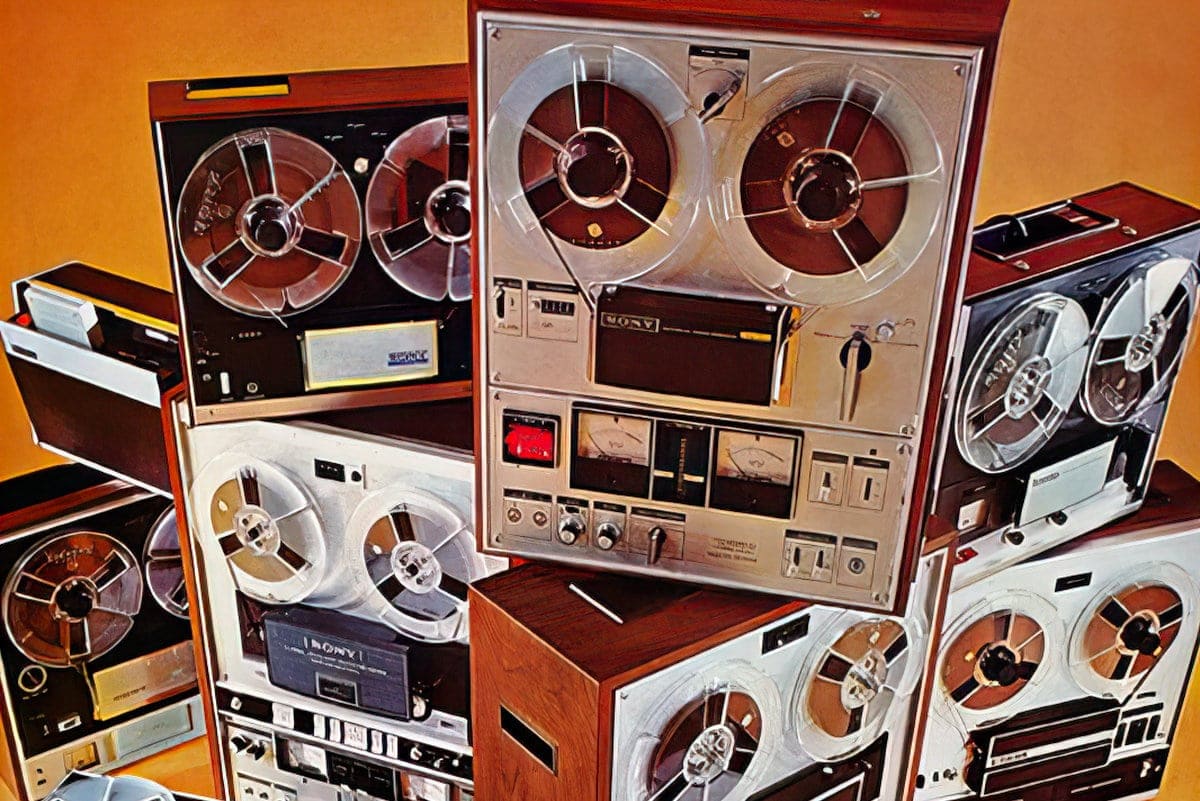
So much so that I have titled it the highlight Reel to Real because we used to use reel to reel
[00:00:29] Speaker B: tapes back in the day.
[00:00:30] Speaker A: Does anyone know what I'm talking about?
We begin it all with one of the show open themes. And then Norm interviews our guest, Dr. Miles H. Bader, author of 4001 Food Facts and Chef's Secrets. An excellent conversation on just some of those hints is clearly enjoyed by both Norm and Dr. Bader. He also mentions that at the time his new book to supplement or not to Supplement. And then it's on to caller's galore, some with names, some without.
There's a caller who wants Norm to reboot sounds in the night. Bill visiting from England, a mystery caller, Karen asking about the old time radio talk Norm would travel around and do Ken asking about Middleton, Massachusetts. Then we jump to the next hour with another opening theme. And we have Chonse. Then a French Canadian caller, Brian, a no name caller, John with a heavy Boston slash New England accent. A very interesting call.
Then an unknown caller, Dottie dawn from Billerica and what I believe by the voice was Paul from Malden. Then we hear from our good friend and supplier of many of these shows, Joan and Tewkesbury. And we close it with Al about Commissioning Ships. Episode 292. The Highlight Reel to real spins its way to your ears in three, two and one.
[00:01:59] Speaker C: You tuned in on Nathan. He's one of the great right here on ZZ region 38 states.
I'm singing the song so you know you. It's time for your Nathan show.
When the daytoday world starts to drive you insane and you feel like you're riding on a runaway train, Norm makes you laugh and keep spirits bright.
Tune in 1030 and call Norm tonight.
Hey, out there in radio land, you tuned in on Nathan and he's at your command so stay here and listen Then you'll understand either have it you'll never outgrow.
But right now, Norm Nathan show.
I said right now Norm Nathan show, here's Norm.
[00:03:01] Speaker B: Oh, it's just so nice to be here again. I think I say that every time we sign on the program. I think I'm really getting terribly boring.
We're going to talk with Dr. Miles H. Bader in just a few minutes. He has a book called 4001 Food Facts and Chef.
More usable food facts than any book ever published in the history of mankind. Whole bunch of one liners about all kinds of foods and kinds of tips for cleaning and all that kind of thing that I think you'll find intriguing. I found it intriguing. What I'm leading into, I guess, is we always hear about various kinds of uses. For example, for baking soda. It makes our refrigerator smell nice. We can brush our teeth with it.
We can send it to school and get it at the griot.
Those kind of things that we can use instead of the commercial products.
[00:03:55] Speaker D: Oh, sure. In fact, I did a whole show for the Discovery Channel on that on vinegar and baking soda. Just those two?
[00:04:02] Speaker B: Just those two with the.
[00:04:03] Speaker D: The book is loaded with stuff on vinegar and baking soda. It's probably got about 30, 40 facts out of the 4,500 that are in there.
[00:04:10] Speaker B: Could you give us just, just a little sample of some of them?
[00:04:13] Speaker D: Oh, well, let's see. To clean a copper bottom pot with vinegar, just fill a spray bottle with hot vinegar, add 3 tablespoons of salt, spray it on the copper bottom pots, let it sit for a little while, then clean it off and they'll come perfectly clean.
If you want to get rid of stains on an iron skillet, just boil a small amount of vinegar and salt on the surface and that'll take care of it. In fact, you can do that with any type of pot and pan, including aluminum, and it'll clean it up.
It's an excellent grease cutter when added to dishwasher water. A little bit of vinegar, baking soda.
Gosh, hundreds of reasons there. It'll brighten the carpet. Sprinkle a little baking soda on the carpet before you vacuum, let it sit for a few minutes and it'll brighten the color of the carpet up. If you add a small amount of baking soda to any cooking vegetable when it's cooking, it'll help retain the color of the vegetable. It won't lose color when you're cooking it. It's an excellent chrome cleaner. Won't scratch the chrome. Baking soda. And there are 4,500 household hints. Cooking secrets, chef secrets. It's really a kitchen reference book. It's not a cookbook, but it's something that never leaves the kitchen counter.
[00:05:22] Speaker B: I know, and I, you know, I just glanced through it. It's not the kind of thing that you read from COVID to cover, right. In one sitting. It's the kind of thing you look up when you, when you're interested in things. One thing that I was particularly interested in was things like eggs. You got a whole chapter on that.
[00:05:38] Speaker D: A whole chapter on eggs.
[00:05:40] Speaker B: Yeah. Since the reason, the reason I'm saying this is because I have chickens, you see, Unless I have hens, unless I raise, I keep them for, for eggs. I don't slaughter any of them for, for food because I happen to be a kindly old gentleman.
[00:05:56] Speaker D: Well, that's very nice.
[00:05:57] Speaker B: I think that is sweet. That is just as sweet. But people are always asking, you know the difference between brown eggs and white eggs. And I tell them that there, there is no difference.
[00:06:07] Speaker D: Well, there really isn't. And it's a type of chicken that lays a brown egg, or sometimes it's their feed that changes the color of the other shell, but absolutely no difference.
I use brown eggs instead of white eggs. I just happen to like them better.
Most of them that are advertised in the store come from free range chickens and I just happen to like that better. I'd rather buy an egg from a chicken that's running around free than one that's cooped up in a little tiny square.
[00:06:32] Speaker B: You'd love my eggs. These chickens not only roam free, but they have parties and they just whoop it up with funny little ants.
[00:06:40] Speaker D: Live it up, music, everything. Huh? I know that we can tell people how to tell how old an egg is, how to store them longer even how to fix a cracked E. Now
[00:06:48] Speaker B: how do you tell this? Some people say if you can put an egg on edge.
I'm not saying this correctly.
[00:07:00] Speaker D: You mean when you spin them?
[00:07:02] Speaker B: Yeah, that kind of stuff that tells
[00:07:03] Speaker D: the hard boiled egg from a fresh egg, an egg that hasn't been boiled yet.
That's all that does. If it spins evenly, it's hard boiled. If it wobbles, it's not hard boiled. If you want to tell how old an egg is, just take a tall pot, fill it 3/4 full of cold water, drop an egg in not from too high up or it won't matter. And if it goes to the bottom and lies on its side, it's fresh. If it stays on the bottom and comes up at a 45 degree angle, it's about three to five days old. If it stays on the bottom and stands up at a 90 degree angle, it's about 10 days old. If it floats to the top, take it out, bury it in the backyard along with your banana skins.
Right.
[00:07:45] Speaker B: In any event, even after you use eggs, don't throw the shells away. Use them for fertilizer.
[00:07:51] Speaker D: Shells are excellent for fertilizer.
[00:07:52] Speaker B: Yes. They add lots of protein and stuff and good for the soil. And as a result, I have the best growing weeds anywhere in northeastern Massachusetts.
[00:08:00] Speaker D: You know, I think I read about that here in Las Vegas.
[00:08:02] Speaker B: Yeah, it made all the wire services. And I'm appearing with Brian Gumbel next week on the Today show.
[00:08:08] Speaker D: Weed growing.
[00:08:09] Speaker B: You okay.
Also, is it true, then, the easier it is to peel an egg, the older the egg would be?
[00:08:17] Speaker D: Well, that actually is true. If you want to peel a fresh egg, put some salt in the water and harden the shell. It'll make it easier to peel. And then there are certain ways to peel eggs. You crack it all the way around. Put a spoon under the. Between the shell of the egg and just circle the spoon around and the shell comes right off.
[00:08:34] Speaker B: Okay. Because the shell sort of loosens from the.
From the egg.
Listen, it seems to me the older it gets when it's a very fresh egg, so you just pulled it out from underneath the chicken.
The shell is just tied up against the egg, and it's really very hard to peel at that point.
[00:08:55] Speaker D: That'll work. If you want to keep eggs longer, put a little vegetable oil on the outside of the egg, and that'll seal it up. It'll last two to three weeks in the refrigerator and still be fresh.
[00:09:03] Speaker B: Okay. I don't know why. You know, I feel like I'm talking with that. That lady on the Mary Tyler Moore show you used to have, Kip. So who am I thinking of? What was her name?
[00:09:13] Speaker D: Heloise.
I've been compared to her because the book is similar to that. It's, you know, every household hidden cooking secret imaginable. Your grandmothers and great grandmothers. You name it, it's in here.
[00:09:24] Speaker B: Yeah. No, I was thinking of the character Betty White played, remember, on the old Mary Tyler Moore show, who used to give household hints and all that kind of stuff?
[00:09:33] Speaker D: Must have been before my time.
[00:09:34] Speaker B: Oh, stop it. Just stop it.
You got such a hip name and you're talking so silly, I keep wanting to call you Miles.
[00:09:42] Speaker D: That's fine.
[00:09:43] Speaker E: Call me Miles.
[00:09:43] Speaker B: May I do that?
Okay.
[00:09:45] Speaker D: I can tell you why you store cottage cheese upside down. That's a fun one.
[00:09:50] Speaker B: I'm sorry, say that again.
[00:09:51] Speaker D: Cottage cheese. We. Well, when we did the book, we visited chefs all over the world to get some of their secrets to their recipes. There are no recipes in the book, but the secrets. And we went into their cupboards and found a lot of their foods upside down and couldn't figure out why. And a good example of why is cottage cheese. When you open cottage cheese, little spores get in there from the air and they live on the oxygen layer. When you close it up and by the date on the bottom or a few days afterward, it turns moldy and it goes bad if you don't eat it up. But if you turn cottage cheese upside down, shake it a little bit, allow it to fall to the top, you eliminate a lot of the oxygen layer. Spores can't grow as fast, and the cottage cheese will last about seven to 10 days past the expiration date. And you can do that with any food that'll move in the container. It'll last longer, retain its flavor better.
[00:10:38] Speaker B: You mentioned that for turkey also, didn't you? To cook it upside down.
[00:10:41] Speaker D: Turkeys prefer to be cooked upside down for the first hour. You just take a V rack, turn them upside down, breast down, you get a moist breast, all the the juices will flow to the breast for the first hour. And if you're using a bag of some sort, you won't get a lot of liquid residue building up for the first hour. So you can turn the bird right side up. Now, this book will literally tell you everything and every trick imaginable to do in the kitchen. How to make the lightest pancakes, everything.
[00:11:07] Speaker B: No, the book is great. We're going to give a toll free number and all that in just a second because it's well worth looking at. And we're just kind of skirting a few things here or there, you know, by our conversation. One thing I wondered about sour cream. Now, how can something that's called sour cream, how can that go bad? I guess it does because it starts to turn green after a while.
[00:11:30] Speaker D: Well, the same reason I just mentioned cottage cheese. The spores get in there from the air and dairy products really will develop mold very quickly.
So it's the process.
Sour cream, if it'll move in the container, should be stored upside down too, for the same reason.
Also, if you have a liquid forming, don't drain the liquid off sour cream, mix it back in again. That's whey. It's a good protein.
[00:11:55] Speaker B: Oh, eating her curds and whey.
[00:11:57] Speaker D: There you go.
[00:11:59] Speaker B: Son of a boy.
[00:12:00] Speaker D: The past coming back.
[00:12:02] Speaker B: I'm a slow learner, but it begins to stick to my head after I get to know it well. But Anyway, it's called 4001. You said there were even more Kipson
[00:12:12] Speaker D: 4500 solutions to cooking and kitchen problems, how to repair food. You name it.
[00:12:18] Speaker B: Okay. And it's by Dr. Miles H. Bader. B A D E R. It's published by.
By. By you.
[00:12:25] Speaker D: Now it's published by Northstar Publishing. That has changed.
[00:12:29] Speaker B: Okay. North Star.
[00:12:30] Speaker D: You.
[00:12:30] Speaker B: You have new editions that come out. Although the facts that you have in there seem like they, you know, they're. They're the kind of you could use forever.
[00:12:38] Speaker D: Oh, this book actually could go on for a hundred years. It'll never stop because the things in there, as you say, can be used forever. Basically, it's your grandmother's and great grandmother's secrets to kitchen. Working in the kitchen, working with food, things that we've forgotten, like how to make the best mashed potatoes. Every little trick.
[00:12:55] Speaker B: I think that is so helpful to have.
And you're married, are you not? Or are you?
[00:13:00] Speaker D: Of course.
[00:13:02] Speaker B: Now, do you do most of the stuff around the house that is your wife, or do you get in her way?
[00:13:06] Speaker D: Because I'll tell you, living here in Las Vegas, we eat out a lot.
I used to do a lot of cooking. But living here is great.
[00:13:13] Speaker B: No, I didn't. I didn't know that your wife would say, you know, okay, Miles, you know, I know you know everything, but just stay out of it. Let me do something once in a while.
[00:13:21] Speaker D: Usually she'd rather let me do it.
[00:13:23] Speaker B: Now, how did you have to come up with all these things? I find that just an incredible amount of stuff in here.
[00:13:29] Speaker D: My patients, actually, they knew I was interested. I've been in the nutrition health prevention field for the last 20 years, and they bring me in these facts about food. And I just kept compiling them, and about a year and a half ago, a patient asked me to put them all together, and we ended up didn't have quite enough for books, so we all ended up in libraries throughout California going through old cookbooks in the 1800s, trying to go back as far as we could to find things that had not been printed recently but were still very usable. And people could pick the book up and use it as a kitchen reference book and find out all these old facts that have been lost through the years. And they really do work.
How to make gravy without lumps. How to make, as I say, mashed potatoes is a good one.
[00:14:13] Speaker B: Okay, you have one section here which would be of interest to, say, those of us of the Jewish faith.
You say the safest poultry is kosher poultry. Is that true of kosher meats and all of that, too?
[00:14:25] Speaker D: Yes, it's just the way that, well, the Jewish dietary laws are such, they're very, very strict and therefore you're going to get a better grade of meat. Chicken. Chickens are hung up and they're bled individually. They're hung up and salted with cold salted water. A number of times they're not put in a warm communal bath where if one chicken has something, it goes to the next. The only thing I like to mention this whole chapter on foul facts in the book.
And we like to mention that when you bring home any kind of chicken, it doesn't matter what kind, you really should clean it with cold salted water. About 3, 4, 5 good rinses before you cook it. You'll find it'll taste better and you will eliminate some of the bacteria and blood residue that might be there.
[00:15:10] Speaker B: Okay. Anyway, we have a toll free number. Is this available at most places, do you think?
[00:15:16] Speaker D: No, we're just barely getting it into bookstores and we have a. Actually we have a free book offer that I've never done before.
[00:15:24] Speaker B: Hey, want to do it now?
[00:15:25] Speaker D: Sure. We have an 800 number. It's 1-800-717-6001. That's 1-800-717/6001 and the book is $14.95. If anybody does call and purchase one, we're going to give away a copy with every single book purchased of my brand new book that just came out called to supplement or or not to supplement.
And we'll give away a free copy with every single 4,001. And of course nobody will be there till Monday morning. We're on the West Coast.
[00:15:56] Speaker B: Can you tell me about to supplement or not to supplement? What's that about?
[00:15:59] Speaker D: Well, it tells people whether they do or don't need supplementation. All the things right up to 1995, the new super antioxidants coming out of France, the new phytochemicals that are being used in cancer studies in every university in the United States almost.
[00:16:13] Speaker F: And why?
[00:16:14] Speaker D: What is happening with our environment and lifestyle, why you may need supplementation regardless of the way you eat? In fact, I showed this to a few physicians a few days ago. They looked at it for 30 minutes. They've never taken a supplement in their life. They're both taking them.
People just do not realize what's going on in our environment these days and how it affects the body. But it's a very easy to read book and right up to 1995.
[00:16:42] Speaker B: Okay, in the original book that we've been talking about, the 4001 food facts you do have quite a good deal on vitamins and that kind of stuff. And a lot of people wonder, you know, do vitamins really help? Are they really important? Can we skip vitamins? Are we overdosed with vitamins or what?
[00:16:57] Speaker D: Well, I'll tell you, a lot of people do take more than they really need. In fact, so much so that about two weeks ago I put out my own brand and I just got fed up with what was on the market. The problem with vitamins is a lot of them that you buy in the supermarkets, drugstores, even from some companies have a very low biologic activity level. The one that I put out has 100% biologic activity level. In other words, you buy products, you pay good money, you take them and you really don't get what you're supposed to get out of.
[00:17:28] Speaker B: You think there are a lot of people take more.
You sort of hinted at this, that more people take more vitamins than they really need or take vitamins when they don't really need to.
[00:17:36] Speaker D: They need to know more about it, which is why I put the book out. People just don't know enough. And there aren't any really simple, easy to read books that give you this type of information, which is why I put it out.
Vitamin C is a good example. If you take more than a 500 milligram at one time, you're going to lose it because the body can only metabolize about 2 to 250 milligrams an hour.
So unless you take a time release or a smaller dosage, it's basically gone and you're just throwing money down the toilet.
[00:18:05] Speaker B: But does it do you any harm if you overdose?
[00:18:07] Speaker D: It's not going to harm for the most part. Most vitamins are going to be harmless. There are some that you can overdose on, but it's fairly rare. Vitamin A, vitamin D, some of your fat soluble vitamins like that.
[00:18:19] Speaker B: What about these nature food stores? Are they worthwhile or do you think they're overdone?
[00:18:24] Speaker D: Well, here again, I'm not against any of those type of stores.
You've just got to be sure you have a quality product.
And a lot of companies will put out literature telling you how their vitamins are produced or give you enough information on the bottle. There's just too many things in a lot of vitamins in the country that people don't need to have in their binders, fillers, stearates, waxes, sand. You'd be amazed what's in a vitamin.
[00:18:54] Speaker B: You kidding about the sand?
[00:18:56] Speaker D: No, no, you've got silica. You've got so many things in vitamin tablets now that you really don't need to have in there. You should have more natural.
I'm just a firm believer in it which is why I got fed up a few months ago and decided to just put my own brand on the market.
[00:19:13] Speaker B: Now your own brand is called what?
[00:19:15] Speaker D: It's just super antioxidant and it's.
We can send information through my 800 number.
[00:19:21] Speaker B: Okay, so the, the number is 1-800-717-6001 and for people ordering the 4001 food facts which incidentally is really a great book. I've hardly talked about the things that you've talked about in the book. Mainly because there are just so many of these facts that it's not the kind that.
Well, you can browse through it but, but mostly looking up areas that have of interest to you and all that. It does contain a lot of stuff and you, you'll find yourself going back to the book again and again and it's, it's, it is, it is fun. It's fun to look at.
[00:19:58] Speaker D: It'll even tell you how to pour soda over ice cubes without it fizzing up over the top. How to get rid of ants and insects in the kitchen. Naturally.
[00:20:05] Speaker B: I like that too. You have a lot of that kind of stuff because, because we're, you know, we've been told we're going to destroy the environment with some of these chemical anti ant things that we have. And you have all kinds of ideas about how to get rid of ants without using strong chemicals.
[00:20:23] Speaker D: Same with mosquitoes and flies. All you gotta do is keep a basil plant or two around the home. You won't see a mosquito or fly in the house.
[00:20:29] Speaker B: Isn't that incredible? I found the book fascinating and I feel kind of helpless the way I'm talking about it or hopeless I think may be the thing because I don't think I've really captured the full significance of it. But it's a good book. And again the phone number is.
The toll free number is 1-800-717-6001. If you're lying in bed and you haven't jotted the number down, send me a note and I'll send you the number anyway and all that kind of stuff and how you can get it. But I really appreciate talking with you. The woman I was trying to think of was Sue Ann Nevins who used to give tips like that. Played by Betty White on the Mary Tyler Moore Show. Anyway, the book is really, really fascinating
[00:21:12] Speaker G: and I was wondering if there was. Is there any chance that you would
[00:21:15] Speaker B: maybe reincarnate Sounds of the Night one
[00:21:18] Speaker H: weekend or one night?
[00:21:20] Speaker B: What a nice thing to say because you were, you were about 30 years away from being born at that point.
[00:21:26] Speaker H: Right?
[00:21:27] Speaker B: I don't, I wouldn't. What I would like to do, do really the. For people who don't know what Sounds of the Night was, it was a show I did back in the 50, 57 to 68, I guess roughly during that period. And it was a jazz show. We had interviews with the jazz people who were in town and all of that kind of stuff. And our audience at that time was mostly college age kids because they were the ones who were really involved in that kind of music.
In any event, I don't, I don't know. What I would like to do is a combination of that program, you know, get kind of silly and talk and, and plus play some of those kind of songs and maybe interview some jazz musicians as well as other kinds of people up to Wales.
What's the name of that? The castle. The Palace.
[00:22:13] Speaker D: That's where the.
[00:22:14] Speaker I: Prince Charles.
[00:22:15] Speaker B: Yeah, he was. Yeah, he was invested. His invest. What do you call invested? Whatever.
[00:22:20] Speaker D: No, investiture.
[00:22:21] Speaker B: Investiture. There was canal.
Yeah, Carnarvon. Yeah, Carnarvon. Anyway, that whole, the whole countryside was beautiful. I remember stopping in one of those bed and breakfast places and the woman there reminded me of Greer Garson out of a World War II movie.
[00:22:38] Speaker D: Come on.
[00:22:39] Speaker B: No, no, I really mean that. She was a lovely looking lady. She's, you know, she had the accent that Greg, this Greg. I think Greg Garcia had a British accent. Anyway, it was. Anyway, I do love the country. I thought it was just beautiful.
[00:22:52] Speaker I: I said, the only thing that confuses me over here is your political system.
[00:22:58] Speaker B: The political system. Yeah.
[00:23:00] Speaker I: It confuses me because, well, you, you know, John Major has the majority in the House of Commons.
[00:23:08] Speaker B: Well, I know you have a parliamentary system and we don't.
[00:23:11] Speaker I: And it just confuses me because when I, prior to dialing your number is that you're talking about Republicans and Democrats and someone's liberal and someone's conservative.
[00:23:24] Speaker B: Vice versa.
[00:23:25] Speaker I: I just can't equate to it.
[00:23:28] Speaker B: Yeah, see in England the difference.
You're welcome to ask any questions, Bill, because I want to not only do a frivolous, silly program, which I do all the time.
[00:23:36] Speaker D: Well, you don't.
[00:23:37] Speaker I: I love it.
[00:23:38] Speaker B: Norman, I want you to have a learning experience.
See the difference between two. I'll just sum it up quickly because I don't think anybody wants to hear me.
But you have a parliamentary system where you vote for the party and then the party has its leader and he becomes, or he or she becomes the prime minister.
And here it's, here it's just the opposite. We vote for the individual and when they get in, they can't guarantee anything because the legislature could be a different party, which it is right now. So it's not the same.
It's not as controlled in that sense as if as it is in England. When you vote in England, you know pretty much what you're voting for.
[00:24:16] Speaker I: Sure.
[00:24:16] Speaker B: And the party can't back away because, you know, but here they can. And it can all split.
[00:24:23] Speaker I: But don't you think though that if someone, if a particular party or. I don't like, like in London. I can only equate with London to your political system. But don't you think it's going to take, it takes so much longer over here to get something done?
[00:24:39] Speaker B: Oh, sure. It not only takes longer, but the, the political campaigns go on forever. People are, people complain about that. Like you have a, you have a limit, don't you, on, on the length of the political.
[00:24:51] Speaker I: It's like six months at least. It's the minimum.
[00:24:54] Speaker B: Minimum or maximum?
[00:24:56] Speaker I: It's the minimum six months minimum. Because the, the prime minister just like, for argument's sake, he says, well, that's it. We haven't got a majority anymore. The election will be like four months time.
I see it.
[00:25:10] Speaker B: Oh, I see. Oh, yeah. Okay.
[00:25:11] Speaker I: Yeah. And everyone, on that particular day, everyone goes out and votes.
[00:25:17] Speaker B: Yeah. You don't, and you don't have a specific date.
It's not written into your constitution when you're going to have elections. You have them when the party seems to be dying or losing favor or whatever, and then they decide we better go to the public and have an election. Now we have them on a specific date every four years on a national basis and of course more often on statewide or local and that kind of stuff. Yeah, it's quite, it's quite a different system. I don't know which one is better. I, sometimes I think the, the English system is, is better because the party that's put into power can pretty much guarantee what's, you, you know, what's going to happen here. You, you really don't know.
[00:25:55] Speaker F: You know.
[00:25:56] Speaker I: May I ask you another question? Please?
I'm boring.
[00:26:00] Speaker D: You're.
[00:26:00] Speaker B: No, no, that's okay. Let me ask you first of all, is this your first visit to the United States. And, and you've been here how long?
[00:26:07] Speaker D: Three weeks.
[00:26:08] Speaker B: Three weeks. Okay. And now you've been in Boston all that time?
[00:26:11] Speaker I: Yes, but I've seen all the sites in Boston. I just thoroughly enjoy America.
[00:26:16] Speaker B: Are you going to see other parts of America before you go back or.
[00:26:19] Speaker I: Yeah, I've got a six month visa, so I'll probably do a walkabout.
[00:26:22] Speaker B: Oh, that's good. Okay, so ask me anything you want about the entire United States and I. If I don't know the answer, I'll lie a lot to you, Bill.
[00:26:30] Speaker I: I love you.
[00:26:31] Speaker B: Thank you.
[00:26:34] Speaker I: Can I just ask one more question
[00:26:36] Speaker B: even two very quickly? Two questions even. Sure.
[00:26:39] Speaker I: You know the mega, mega complex that's going on that's been proposed by World.
It's gonna be good. It's gonna like in Boston, like going to have a convention center and.
[00:26:51] Speaker B: Oh yes, yes, yes, yes.
[00:26:53] Speaker I: May I ask you how long, how long would it would take for it to build and just like, just like the UK Someone. Do you like the Channel Tunnel that's gone through between south of England and it goes to France?
[00:27:10] Speaker B: Yes.
[00:27:11] Speaker I: I mean you get these people. I mean that's a private project anyway, but I mean someone said it's only going to cost like 50 million pounds. In actual fact like eight times as much and the company looks as if it's going to go bankrupt. Yeah, but you're megaplex complex as far as I'm reading the newspapers over here for the short time I've been here. But how do you feel, how the population of Boston feel?
[00:27:37] Speaker B: I think most, most people feel it would be a nice thing, but they want private interests, the private business to pay for it. I think polls seem to indicate that particularly when it comes to. I mean they're talking about a thing that will hold the Red Sox, that is another baseball stadium, it will hold the Patriots and bring them to, around to Boston because they're a distance south of Boston now and then have a big huge convention center. I think some people probably would go along with a certain amount of public money, tax money going for the convention, convention center. But I don't think anybody wants to pay to give the Red Sox their home or the Patriots. No matter how much we love these teams, we figure they're private enterprises and they ought to pay their own way. So I think by the time these issues are ironed out and maybe they're going to determine in the end that it's only going to be a convention center or maybe just a convention center and a Patriot stadium or something.
By the time they determine exactly what the entire scope of all of this is going to be, it could be your next visit to Boston in about 12 years. You know, who knows? They've been talking about this for years. This is nothing new. They seem to be closing in on it a little bit more rapidly now. But I think we got an awful long way to go because people just are not agreed on who pays for what or even exactly where it's going to be. They have picked a site in the south end.
[00:29:01] Speaker D: That's right.
[00:29:01] Speaker B: But now some people on the South End say maybe we wouldn't like all this traffic here. Maybe it wouldn't be so great. So maybe it ought to be in the Roxbury area that they were talking about as an alternate side. There's just so much to be ironed out. I don't think it's going to happen very quickly.
Maybe it won't happen at all. I don't know.
I tell you what, Norman, I love
[00:29:21] Speaker I: you and leave you and I apologize to your fellow listeners for hogging all the air signs.
[00:29:27] Speaker B: No, you wouldn't hog it. If I didn't like what you were saying, I didn't find you interesting. I would have got rid of you, you know, hours ago. So don't, don't ever feel that way. And I appreciate the call and I hope you have a glorious time here. And thanks for the call.
[00:29:39] Speaker I: Thank you very much for listening to me.
[00:29:41] Speaker B: Okay, Bill, take care. Bye bye.
Is that Chatham West? Chatham West.
[00:29:46] Speaker D: Oh, you.
[00:29:46] Speaker B: Are you going to be there?
[00:29:47] Speaker I: Yeah.
[00:29:48] Speaker B: Oh, that's good. I look forward to meeting you.
[00:29:50] Speaker E: I'll say hello to you.
[00:29:51] Speaker B: Please do.
[00:29:52] Speaker E: Question.
[00:29:53] Speaker B: Yes, Illinois.
[00:29:56] Speaker E: Was Paul Douglas a senator from Illinois?
[00:30:01] Speaker B: We were talking about Senator Paul Douglas. The late Paul Douglas. Yes, he was a senator from Illinois.
[00:30:06] Speaker E: I was just wondering. I know there was Bob Douglas, the actor.
[00:30:09] Speaker B: That's right. It was not only. There was Paul Douglas the actor. That's right. Who before that was Paul Douglas, the announcer. But he was married to Jan Sterling. Was he married to Jan Sterling? I didn't know that. Yeah. Yeah, but that's. Yeah, that's a different Paul Douglas.
[00:30:23] Speaker D: Okay. I was.
[00:30:23] Speaker E: Well, I know there's Paul Simon from Illinois.
[00:30:26] Speaker G: That would be.
[00:30:27] Speaker B: I do a talk on old time radio and we'll be doing it at the Chatham west on Friday afternoon. I forgot what time. Around 2 o' clock in the afternoon, I think.
And so I'll be out there then. I travel around quite a little bit.
Tony Nesbitt of WBZ will be with me too.
We Played tapes, little excerpts of tapes of old radio shows. Little excerpts. And I bring the audience into it, guessing, you know, who played this part and who was this. And again, it's always amazing to me the amount of knowledge and the strong memories people have about things that happened so long ago.
So that's where we'll be.
[00:31:07] Speaker H: Okay. I heard the last part of it, Shannon west, and I wasn't sure if
[00:31:11] Speaker G: it was a show or if you
[00:31:13] Speaker H: were coming to Brockton or on the radio or whatever.
[00:31:16] Speaker B: Yeah, no, I am coming to Brockton. I'm coming there too. And just talk with the people there.
[00:31:20] Speaker G: Definitely show up then.
[00:31:21] Speaker B: Oh, really?
[00:31:22] Speaker G: Me too.
[00:31:22] Speaker B: Oh, please come by and say hello. I would love you to do that.
[00:31:25] Speaker H: Thank you.
[00:31:26] Speaker B: You're okay. I look for your Friday there.
[00:31:29] Speaker F: Thanks.
[00:31:29] Speaker B: Thanks. Bye. Bye now. Oh, and Middleton. Yeah, we're 250. We had a number of things stretched out throughout the year, but one one at one day. We had all kinds of things going on outdoors, including a rock concert at night. And we had fireworks also.
And we had people come in from everywhere. And now here's a town. At that time, our population was about maybe 4,000 people.
[00:31:52] Speaker D: And what did you have, five policemen?
[00:31:55] Speaker B: I don't think we had that many. I mean, no, we, of course, the state police are always at the ready, but they didn't ever have to call them. But we worried, especially 78. There was still the feeling about drugs, and I know there is now, but then it was done much more openly usually.
So they kept sniffing to see if they could smell marijuana. Anyway, everybody was great, but we must have had 7 or 8,000 people that were sitting on heels all the way around the area. The fireworks, I mean, it was scary. And the police, I know, were nervous about this. I know I was. I was chairman of that year's event. So it was kind of responsible for what went on.
And the rock band is playing and they're screaming and cheering. The people are dancing and they're holding all kinds of.
I forget what they're called. There used to be little green things that lit up at night.
Remember those things? Anyway, people had those while they're watching the fireworks and all the other things. But people were well behaved and it worked out fine. They came and they went and there wasn't a problem. But when you have, you know, 7,000 people in a town that only has about 4,000 people anyway.
[00:33:03] Speaker J: Well, you must have been praying that.
[00:33:05] Speaker B: Oh, man, I kept looking. I kept looking. I said, God, please help us.
Don't let them turn on us. Because there's no way you can control it. There's just no way. Not with those numbers. But they were great. And afterwards we were kind of ashamed of ourselves for even worrying about it.
[00:33:19] Speaker F: Well, no, because I was at the
[00:33:20] Speaker D: Anscombe Field today seeing the show.
[00:33:23] Speaker B: Oh, yeah, the show. Oh, yes, yes.
It really made you feel.
[00:33:27] Speaker D: Because it was for, like a family event and there was so much military police, and so you just felt safe for some reason.
[00:33:36] Speaker B: No, I think that's good. No, I think that's really good. And that's the way it should be.
And to a great extent, especially a show like that, which was, as you point out, a family thing. Normally crowds are pretty good. They're not coming there to make trouble. They're there to enjoy themselves. And they're kind of concerned that somebody's going to make the national group that's meeting in Danvers in another month or so. I don't know, I. Mostly private. I'll mention it anyway, when it's a public thing.
[00:34:02] Speaker I: Oh, okay.
[00:34:03] Speaker D: I didn't want to put you on
[00:34:04] Speaker E: a spot on anything.
[00:34:04] Speaker B: No, no, no. I just. I just don't have the schedule in front of me and most of the time I'm not exactly sure where I'm supposed to be. I have a nice guy who's kind of my manager and who figures all books, all that kind of stuff. But thanks a lot. Maybe I'll see you next time.
[00:34:17] Speaker F: Oh, yeah, one last thing, though, but
[00:34:20] Speaker D: I just wanted to say, state that
[00:34:23] Speaker F: it was good that you caught that
[00:34:24] Speaker J: person, you know, before.
[00:34:26] Speaker D: Before you did some, you know.
[00:34:28] Speaker B: Oh, yeah.
[00:34:29] Speaker D: On the marriage.
[00:34:30] Speaker B: No, that's true. That's what that. We thank. Hope for that. That's great. Yeah, thanks a lot.
[00:34:35] Speaker D: You take care of yourself.
[00:34:41] Speaker C: Each week.
He's beyond compare and so debonair.
He sounds so bright.
[00:34:59] Speaker D: You're on BZ
[00:35:02] Speaker K: 103.
[00:35:04] Speaker B: Oh, please don't turn that dialogue.
[00:35:12] Speaker C: He makes me smile.
[00:35:33] Speaker B: Oh, this is the Norm Nathan show at the Boston Public Library. And the periodicals, newspaper room, that kind of stuff.
They got them all on microfilm and they'll lend it to you. Put it in a machine right there, blows it up. And it's fun to watch the old ads as well as the news stories and all the breaking stories and all that kind of stuff. And just to see the layout of the way newspapers were then, which is quite different than they are now.
[00:36:00] Speaker E: Very true. I got my start during the war, World War II, and I was in radio at the start.
[00:36:08] Speaker J: Was.
[00:36:09] Speaker E: And then I got immediately into the Magazine publication and I spent all those years at it. Over 30 years and so anyhow, you're kind to give me this time to talk about this and brings back happy days.
[00:36:24] Speaker B: I'm glad you called, Chauncey. And I'm glad you sent the stuff to me. And I really appreciate it.
[00:36:28] Speaker E: And you'll find more. That's one of my hobbies, mailing good friends.
[00:36:33] Speaker B: Well, I'm glad. I'm glad that I'll be at the. I'll be one of the recipients.
[00:36:37] Speaker D: Thank you, sir.
[00:36:38] Speaker B: Thanks for calling. Bye bye, Chauncey.
[00:36:40] Speaker H: That's for the French peckus there.
[00:36:45] Speaker F: Oh, is this.
[00:36:46] Speaker B: Is this that French speaking thing that they're going through up there?
Oh, I see.
[00:36:50] Speaker H: Okay.
[00:36:51] Speaker B: It looks so pretty in French. I was thinking maybe here in Massachusetts we could put a French slogan on even. Even the one up in New Hampshire is Live free or die, which I think is a really stupid slogan. Live for live free or die. How would you say that in French?
[00:37:11] Speaker G: Vivre Live free.
[00:37:13] Speaker B: Vivre libre? Yeah. Libre. Yeah.
Or die would be okay. Okay. That sounds better than live free or die.
No, I always thought that was stupid. Namely because. Because rather than live free or die, you'd say live free or fight to be free. But you don't just die, you fight for. Fight for freedom. I don't know. I don't know. There was some crazy governor up that used to be governor up in New Hampshire.
Oh, I love the way you say that.
Oh, that is beautiful. Thank you. Merci.
Au revoir.
Bye bye.
Listen to this.
Common grand piece de fromage.
That sound romantic. You know what that means?
You have a face like a big piece of cheese.
[00:38:17] Speaker E: In any country within the Common Market. You can live in England, the Netherlands, France, Germany,
[00:38:26] Speaker L: Spain.
[00:38:28] Speaker D: So I.
[00:38:31] Speaker B: Well, go get them, Brian. I think that's lovely. I think you ought to do it.
[00:38:36] Speaker E: I would like some advice from people who have done it, you know, who
[00:38:39] Speaker B: have moved for a while.
[00:38:40] Speaker I: I'll be listening tonight.
[00:38:42] Speaker B: Okay, we have the next caller as a matter of fact is a guy from England.
[00:38:46] Speaker L: Okay.
[00:38:46] Speaker F: Meet the Benjamin Brigantine Young Person's Guide.
[00:38:49] Speaker B: A young person's guide to instruments of the orchestra. Right With Boston Pops Orchestra. Arthur was one of the last things Arthur Fiedler conducted before he died.
And the thing. But the thing that amazed me is looking at these, this massive music, you know, with it scored for all these instruments and everybody playing, I mean so incredibly beautifully. I mean they could play little, little trills and things that, that so quickly you could hardly see them on the Paper. And these guys are playing them. Yeah.
[00:39:21] Speaker F: The fun bit in that piece is
[00:39:22] Speaker D: towards the end, when the fugue starts
[00:39:24] Speaker F: and all the instruments come in at a particular time.
[00:39:26] Speaker B: Oh, that. When you. When you're sitting in front of the orchestra and they're playing that, you feel like you're, you know, like it's a coronation, like you're going to be crowned king.
[00:39:35] Speaker L: On your left will be a stone locker, and that is where the South Danvers and Danvers farmers stoned and drove them back with pitchforks because the British landed in Marblehead before they went to Boston.
And the Danvers. And the Danvers South Danvers militia drove them back with pitchforks and sides and whatever. And they drove them back from the North River.
Right there at the top of the bridge, there's a stone marker.
[00:40:15] Speaker B: Well, you said. You said South Danvers. Now, you're saying in this. This was in Salem or South.
[00:40:21] Speaker L: This is.
[00:40:21] Speaker D: This is actually.
[00:40:23] Speaker L: Well, you know what South Dan was.
[00:40:25] Speaker B: South Danvers was. South Danvers was part of Peabody, wasn't it? One time.
[00:40:29] Speaker D: Yes.
[00:40:30] Speaker L: And Salem Village, you know, was Damas.
[00:40:34] Speaker B: Yeah, well, Salem Village was actually part of Middleton. Was. Was. How it was. Salem Village also incorporated. That's right. That's right.
[00:40:43] Speaker I: Yeah.
[00:40:44] Speaker L: Those farmers came down here to the north river, right at the North Street Bridge.
And there's a stone marker down there.
[00:40:54] Speaker B: Okay, now tell me again where the stone marker is. I'm. I'm coming from.
Say. Coming from Peabody. Say you go by.
You go by Peabody. You come into Salem, and you're coming into north street, and you're coming by the river.
The river. Now, the river's just before the courthouse in that area. You mean? I'm talking about that?
[00:41:14] Speaker L: Yes.
[00:41:15] Speaker B: Okay, now, where would the marker be there?
[00:41:17] Speaker L: You know where the top of the bridge is over the North River?
[00:41:21] Speaker B: Yes, I think I do.
[00:41:22] Speaker L: Well, there's a stone marker right at the top of the bridge.
It's on the down river side of it.
[00:41:30] Speaker B: Okay, so you figure that's where the Revolutionary War started.
[00:41:33] Speaker L: That's where it started.
[00:41:34] Speaker B: I'm going to be there in a couple of days. I'm going to look at that, John, and I'm going to think of you.
[00:41:39] Speaker D: There was a.
[00:41:39] Speaker L: There was a restaurant down there called Leslie's Retreat.
And his name, I think it was
[00:41:46] Speaker D: General Leslie of the British Brigade.
[00:41:52] Speaker L: And that's where the farmers from South
[00:41:57] Speaker B: Danvers, Concord, in Lexington and all that.
[00:42:00] Speaker D: Yes.
[00:42:01] Speaker F: One day.
[00:42:03] Speaker B: Really.
[00:42:03] Speaker F: One day.
[00:42:05] Speaker B: Son of a gun.
[00:42:06] Speaker L: And I am certain of it.
[00:42:10] Speaker B: Okay, you sound like. You sound like you know what you're talking about, John.
[00:42:13] Speaker L: I've lived in Salem Village, Davis. I've lived in the old witch house for, oh, 70, almost 70 years.
[00:42:23] Speaker B: You lived in the old witch house?
[00:42:25] Speaker L: Well, my.
[00:42:26] Speaker B: Or near the witch house. Do you actually live in the witch house?
[00:42:29] Speaker L: My grandmother's land is on center street in Danvers and she owned a property in the back where the cellar hole is dug.
[00:42:45] Speaker E: I don't know.
[00:42:46] Speaker L: Danvers Historical Commission dug a hole down there and they found the foundation of the original Sam Parish house.
[00:42:55] Speaker B: Well, you go. One of the wizards, the warlocks, whatever you call a male witch is buried. John Willard was buried not far from where I live.
[00:43:05] Speaker D: Right.
[00:43:05] Speaker B: And that was all part of that Salem. Of course, that's before the Revolutionary war, but that's the witchcraft, hysteria, people period.
[00:43:12] Speaker D: The old way home village.
[00:43:14] Speaker B: Yeah. In 168, the 1680s, I guess is when that happened.
Yeah. Hey, you're okay, John. Thank you. I appreciate the.
[00:43:20] Speaker E: Donna Randolph and I forgot the song you wanted, but God almighty, this guy had everything.
[00:43:27] Speaker B: Really.
[00:43:28] Speaker E: Woman wanted the song because her husband was very, very ill and he wanted the music and all that stuff.
[00:43:33] Speaker J: And well, we got it for him.
[00:43:35] Speaker E: Donald Randolph music.
[00:43:38] Speaker B: Excellent. Where's that? Right in downtown Randolph. Yeah.
[00:43:40] Speaker E: On the right hand side is your corner to Randolph.
[00:43:42] Speaker B: The main, the main road there. Yes, I know the area.
[00:43:44] Speaker D: He has everything.
[00:43:47] Speaker I: Well, I don't know how the hell
[00:43:48] Speaker E: you stay awake, but I guess all these, all these women keep you awake.
[00:43:51] Speaker B: Oh, I don't know about that.
Horsey's about 20, 28, 29 years old, which is, you know, really pushing along.
Yeah, but she's taking, she's taken good care of. And as Zelda, I think she's, she's. She's in good shape. I love looking at her. I think she's. I think she's beautiful.
[00:44:08] Speaker H: It must be good to have something like that. Well, listen, I got a couple of things written down here I want to mention.
[00:44:15] Speaker B: Fire away.
[00:44:16] Speaker H: The Murphy Brown show that you were talking about, that was funny.
[00:44:20] Speaker B: Yeah, I think that show is written so beautifully.
[00:44:23] Speaker H: I think the show is very well written and that was funny. But if you watched it every week first, as long as it. It's been on, it's, you know, I think it's getting there now.
[00:44:32] Speaker B: Oh, you think, you think it's about had it?
[00:44:35] Speaker H: Well, for me, yeah, I think they're keeping it on, but I've watched it all the time now. It's like, oh, again.
[00:44:43] Speaker B: Okay. Yes.
[00:44:44] Speaker H: They just wear out.
[00:44:45] Speaker B: Yeah, I guess so. I don't I don't get to see it that often. I normally see the. The late night reruns, and a lot of the characters are kind of. Some of the characters are really kind of funny.
[00:44:55] Speaker H: They are? Yeah. Yeah. Speaking of that, you have a lot of funny callers. I was just thinking you do have some interesting callers and some interesting guests quite often.
[00:45:06] Speaker B: Hey, you were. Okay, don't.
[00:45:07] Speaker H: You had some pretty good callers. And now.
No. The woman that said you should change the name of the game to the Fun Birthday Game, I think she's right.
[00:45:16] Speaker B: Okay, well, thanks a lot.
I appreciate that.
[00:45:19] Speaker H: Now, I wonder, after all this big buildup, I have a little.
[00:45:24] Speaker B: When are you going to retire and get the hell off the air? Nathan, you're not going to say that. Okay.
[00:45:29] Speaker H: I wouldn't call you if I was going to say that.
[00:45:31] Speaker B: No, I'm just. I was hoping not.
[00:45:33] Speaker H: I had a little information for you and I was wondering about those. What do I have to do to get one of those people? Keychains. When you first talked about them, I called all the time and all I ever got was a busy signal. And I said, I have something that you'd be interested in to tell you, and maybe you'd give me a keychain card.
[00:45:50] Speaker B: I know, and I don't know. I don't know what to tell you about that because I don't, you know, I don't have that many. So what I've been doing is people who send in a letter, that's unusual as things I can quote, or people who win the dumb birthday game or that kind of stuff.
[00:46:06] Speaker H: What part of Middleton are you in? All I know is Middleton like Richardson's?
[00:46:11] Speaker B: Oh, yeah. No, it's the other part. It's off of. Off of Maple street, which is Route 62. Oh, I'm heading toward. Heading toward. I don't want to give you addresses or anything because I may run into trouble, but I know you said it once before, it's heading. It's heading toward Mask and Ahmed.
[00:46:27] Speaker H: Oh, I got it. Yeah.
[00:46:29] Speaker B: Okay.
[00:46:30] Speaker H: Yeah, I was wondering where you would be, where you hit all those. Where you would hear all those deepest.
[00:46:36] Speaker B: Yeah, there's a little. There's a little wetland, a little swampy area. Bog right at the edge of our driveway near the street. And that's why these guys hang out screaming and yelling. But of course, they're quiet now. This is. We're beyond the.
[00:46:50] Speaker H: Oh, you've gone past the top.
[00:46:52] Speaker B: Yeah, we're past. Yeah, past the mating season and not mating anymore.
Every now and then you'll hear one of the losers still crying out for a woman, you know, but it's too late.
[00:47:01] Speaker H: Never give up hope, right?
[00:47:03] Speaker B: No. And you hear other sounds, a lot of other, you know, bullfrogs and other interesting sounds coming out of the bog. Yeah, Bogs are interesting places. Swimming, swampy areas and stuff.
Because you live near. You said you live near the. The pond out there in Danvers.
[00:47:17] Speaker H: Yeah.
[00:47:17] Speaker B: I would think there'd be a lot of. A lot of interesting activity there, especially if you go there at night, just sit quietly and listen, and you can hear all kinds of interesting sounds.
[00:47:26] Speaker H: Oh, that's probably why I see so many people over there all the time. Oh, that probably occurred to me to do that.
[00:47:32] Speaker I: Yeah.
[00:47:33] Speaker H: There we go with the grandchildren in the daytime.
[00:47:35] Speaker B: Oh, yeah.
Oh, you feed the dark stuff. You're talking about the. You're talking about the pond behind the library?
[00:47:41] Speaker H: Yes. Yeah.
[00:47:42] Speaker B: Oh, that's. That's so beautiful.
[00:47:44] Speaker H: Yeah.
[00:47:44] Speaker D: Oh, it is.
[00:47:44] Speaker H: Yeah. Yeah, it's beautiful. You see a lot of cars and trucks parked alongside there, like lunchtime.
[00:47:51] Speaker B: Oh, yeah, it is nice. And the library, they've. They. Cause they've added to that.
[00:47:55] Speaker H: And the library that I have ever
[00:47:57] Speaker B: been in, it's beautiful.
It is, it is, it is. I have a. I have a library card there, too, and I've been going there for a lot of years. Of course, I'm a little favorable toward our own library in Middleton, which I've loved for all these years, but the one in Danvers is really very nice. The Peabody Library there.
[00:48:16] Speaker H: Yeah, it's outstanding. I would say anything you want, anything you're interested in, you'll find there.
[00:48:23] Speaker B: That's right.
[00:48:23] Speaker H: Yeah. And also, I saw your picture, of course. I'm sure everybody sees your picture in the sale of news.
[00:48:30] Speaker B: Oh, yeah.
[00:48:31] Speaker H: That was a pretty active fellow there in the.
[00:48:32] Speaker B: Oh, in the town, there was a terrible picture because it looked just like me. I hate pictures.
[00:48:39] Speaker H: You sound like most people say.
[00:48:40] Speaker B: I know most people. I'm sorry. Most people don't want pictures that look like them. That's why they say the same thing.
[00:48:47] Speaker H: Yeah.
[00:48:47] Speaker B: Yeah, they said, what a terrible picture. That means like me. Yeah. That means it looks just like me. That's right.
[00:48:52] Speaker H: See? It's great talking with you. I finally got through.
[00:48:54] Speaker B: I'm glad you did, Dottie. And I'll be looking for your note.
[00:48:57] Speaker H: And I'm glad you work until five.
[00:48:59] Speaker B: Okay, thanks. Okay, thank you. Bye.
[00:49:01] Speaker H: Bye.
[00:49:02] Speaker B: Okay, let's talk with. Let's see, we. Oh, we got my friend Don up In Bill Ricca. Hi, Don.
[00:49:07] Speaker F: Hello.
How are you, Norm? How you doing?
[00:49:10] Speaker B: Good. This is that I want to tell everybody. This is the authority and showbiz.
[00:49:15] Speaker F: Donnie was right about the son, except the son was Philippe.
[00:49:19] Speaker B: Oh, his name was Philippe Cousteau, he said. Not a very common name.
[00:49:23] Speaker F: No, it isn't. But one time in the newspaper. Now, this is why there's a newspaper. There was an article in the Herald on the history of rock music, and the author had my name.
[00:49:38] Speaker B: Oh, really?
[00:49:39] Speaker F: Yeah.
[00:49:41] Speaker B: Okay. The only time I've ever seen my name in the Dustin Hoffman movie Little Big man was that, you remember that he played, he played an aging Indian.
He, he went from a very young guy to a very, very old guy.
[00:49:55] Speaker F: Yeah.
[00:49:56] Speaker B: I was watching the credits at the end of this movie, and I'm coming to the credits. One of the Indians was played by a game, that guy named Norman Nathan. That's me.
That's my, that's my name. I, I, I, I kept, kept squinting at that. You know how the credits go by so quickly, you wonder, did I really see that or is that true?
[00:50:15] Speaker F: You're like me. See, everybody says, how.
[00:50:18] Speaker B: Why do I.
[00:50:19] Speaker F: How do you know so much about movies? When I was a kid, when we first got tv, I used to read the credits. Everybody read the main stars, but they wouldn't read the credits.
[00:50:27] Speaker B: Oh, when the credits come down at the end, everybody's up and they're out in the lobby. By the time they, they're even partway through, I'm the I'm.
I, I. And whoever goes to the movies with me, we sit there and we curse people who stand up in front of us because I want to know, I want to know who the kids.
I want to. Who sold them insurance? Oh, yeah, they have too much junk on there. You know, you don't really care about most of it, but no, I stay there till the very end, until the credit, until it's totally done and the lights are on.
[00:50:56] Speaker F: Before I turned you on, I was watching Nick at night. He had a Superman episode on. Now, this was a real old Superman episode. It was. George Reese played Superman.
[00:51:08] Speaker B: I know. He looks so silly. I've seen this.
[00:51:10] Speaker F: And Lois Lane was played by Phyllis Coates.
Noel Neal is the most famous one. But Noel Neal played in with Kirk, Alan in the movies. And then another company did it with George Reed, and they used Phyllis Coates. And when Phyllis Coates left, they coerced Noel Neal to come over to that studio. But one of the crooks on it was Russell Johnson.
[00:51:35] Speaker B: Okay, you Say Russell Johnson. Like I should know that name.
[00:51:37] Speaker F: Russell Johnson was a professor on Gilligan's Island.
[00:51:44] Speaker B: Okay, see, you know too much of this stuff. You really do.
[00:51:46] Speaker F: I've seen Gilligan's Island.
[00:51:48] Speaker L: Right?
[00:51:48] Speaker B: Yeah, not too often. I always thought it was a stupid program.
[00:51:52] Speaker F: Well, most of the situation come.
[00:51:54] Speaker B: Yeah, but I have seen them.
[00:51:56] Speaker F: You know, they're fun to look at, but you wouldn't want to, you know, I can't. People watch basically every.
How many episodes they do a year? 32. I mean, I brush upon them. Maybe I miss a monopolist, but I couldn't see the same thing every week because it is silly. But I mean, once in a while it's good for a laugh, you know?
[00:52:14] Speaker B: No, that's true. Well, there are some situations, comedies that I love watching thousands of times over. Mary Tyler Moore, the Dick Van Dyke Show. I think it's so, so beautifully done. And some of the current ones, like here's the fantasy that I have come close in. I want everybody here. So I don't want my producer, Hope to shower to hear this because she thinks I'm a distinguished, dignified old guy. See, but one would be Murphy Brownlee, played by Candice Bergen. I think she's incredible. There's something. I know she's married and we'll try to forget that for the moment. And I think the show is beautifully written, as I mentioned a little while ago. And the characters are great. They're strong, interesting characters. I have a fantasy about spending the evening. Evening or the night. Let me. Let me just go the whole route with this, with Candice Bergen. And also there's another woman who has a TV show on that night too, on Monday night.
[00:53:13] Speaker L: Cybil Shepherd.
[00:53:15] Speaker B: Sybil shepherd, yeah.
To me that I could. I could be. Spend the night with both of them and then die the next morning. I wouldn't care. I feel that my life.
[00:53:24] Speaker K: And after about the third handcuffed Polynesian canoe with matching.
[00:53:28] Speaker F: With the basket, I spot this guy
[00:53:32] Speaker K: that I believe is Richie Cunningham. Tom Bosley. So I back up and lo and behold, it's you.
[00:53:39] Speaker B: You.
[00:53:39] Speaker K: You really do look an awful lot like him.
[00:53:42] Speaker B: I. A lot of people say I sounded like him. I didn't know that I looked like him. Is he. Is he a little fat old guy too?
[00:53:48] Speaker K: I don't know, but describe him that way. But there is a similarity between the two of you.
[00:53:54] Speaker B: No, I know what I look like, so it's okay. But. But he.
No, people say sound like him. I didn't think I looked like him. Too. You think there's a resemblance to.
[00:54:03] Speaker K: Well, at high speed there was. But when I came to the end, I said, wait a minute, I gotta. I gotta start listening to what they're saying because I'm definitely not gonna get this with no voice.
[00:54:13] Speaker B: That's good. That's kind of funny. That's funny, Linden.
[00:54:16] Speaker K: What I wanted to ask you about was.
Used to work for wmex. Womix.
[00:54:21] Speaker B: Yes, Way back, thousands of years ago.
[00:54:24] Speaker K: And well, I remember listening to them in 62.
Who owned Wemex?
[00:54:29] Speaker B: See, I was gone by then.
The people who owned it at that time. Let's see. What the heck. There was a.
By that time I was over at WHDH because I went to WHD, so I was 53.
So I was at the.
[00:54:45] Speaker K: Oh, you left womix.
[00:54:46] Speaker D: Way, way back.
[00:54:46] Speaker B: Way back. I worked for them from 44 to about 50. 51, something like that. 9. 9 wasted years.
[00:54:54] Speaker K: Were they in business for a while when you went to work for them to. How far back does WMEX go?
[00:55:00] Speaker B: Well, it went back.
It started out as in Chelsea.
And if you really want to go way back, it had different call letters. At one point. Point it was on. It was in Chelsea. Then it went to the hotel. Remember the Hotel Manger, which became the Hotel Madison, the one that they.
[00:55:19] Speaker K: I know the Madison.
Remember the Manger.
Believe it or not, I'm only 40.
[00:55:25] Speaker B: Jeez.
[00:55:26] Speaker K: You don't remember all the way back to when I was 4 or 5 years old.
[00:55:30] Speaker B: Yeah, because the fact that you even remember the Madison is astonishing. It's the same hotel. It used to be called the Manger. Then it became the Madison.
And they were in that hotel. I guess now I joined them in 44 when they. By that time they were a WMEX and they moved to a. More to.
What am I thinking of? Brookline Avenue near Fenway Park. Right in the Fenway park building.
But they had been in building in the business a while before that.
The people who owned that were the.
The Potays, Al and Bill Potay and assistant Marie Mason. And it's before the period you're talking about.
[00:56:11] Speaker K: It was a family owned station.
[00:56:13] Speaker B: Yeah, it was a family owned station. And probably not. Probably. Definitely the worst run station ever in the history of the entire world.
[00:56:20] Speaker K: Do you know how long they've been gone, by any chance?
[00:56:25] Speaker B: No, no. You're talking about that ownership. No.
[00:56:28] Speaker K: I mean just to call it as Mexico.
[00:56:31] Speaker B: No, they. I don't know exactly. They became wits for information something and something sports or information talk and Sports. They became wits, then they became wmre.
And now there's something else now, when they stopped becoming Mex, it was 15:10
[00:56:52] Speaker J: on the dial, right?
[00:56:53] Speaker B: Yes, that's right.
[00:56:54] Speaker K: Yeah, I went looking for them one time ago, five or six years ago. I got a nostalgia thing in my
[00:57:00] Speaker F: head and I said, let me see
[00:57:01] Speaker K: if I can find it. And I found it.
[00:57:02] Speaker B: And then I realized, yeah, that's some. Some producer, I guess, thought he was being cute. And I suppose I would think it's funny too, except I worked there for about 21 years.
[00:57:11] Speaker K: Anyway, the animal on there for the last day. I'm sure you know who I mean by that. He's now up on the other station.
Howie Carr.
[00:57:19] Speaker B: Oh, Howie the Animal.
[00:57:20] Speaker K: He's all right on some things, but he goes off the deep end on.
[00:57:23] Speaker B: Yeah, well, he tries to be that stuff. I don't think we knew what we were tuned to half the time. Maybe we did, I don't know.
But people are really, really getting really hip. Hey, is this Joan and Tewkesbury, my friend Joan.
[00:57:36] Speaker G: This is Joan and Tewkesbury.
[00:57:37] Speaker B: Joan and Tewkesbury.
[00:57:38] Speaker G: Your program's very good tonight.
[00:57:40] Speaker B: Oh, thank you very much.
[00:57:41] Speaker G: I've been awake all night. Listen to it. I'll hate myself tomorrow, but today, I guess I look out and I see it's getting light out there.
[00:57:49] Speaker B: Yeah, it's because, you know, we're now into, what, June 11th. We're getting into the longest day of the year within the next couple of weeks.
[00:57:56] Speaker G: And then before you know, it'll be getting to the shortest.
[00:57:58] Speaker B: Oh, don't, please, please, please don't. Don't start talking that way.
[00:58:02] Speaker G: No, I'm enjoying every day.
[00:58:04] Speaker B: No, because I know. Because I think the same thing. I think, well, okay, it's the longest day. What is it once it's the longest day that it'll start to. The days will start getting shorter and we might. Let's enjoy eating day as it comes along, Right?
[00:58:16] Speaker G: That's right.
The fellow that called about the moving to Ireland and he just thought he'd pick up roots and go and stay. It'd really be smart. Smarter if he went and stayed for six months. Well, maybe even three months and see if he liked it there.
[00:58:36] Speaker B: I would think so.
[00:58:37] Speaker G: I can't see because it's a different place altogether. You always carry a raincoat or an umbrella because it always.
It rains almost every day and just very lucky to see the sun.
And it's. And they had a very bad winter last winter. They had more Snow, really, than we did. And they don't usually get snow, but, you know, they had it. But anyway, I have an address if he's interested in dual citizenship.
Boston address, if you want me to give it.
[00:59:14] Speaker B: Sure.
I don't know if he's listening now, but I'll jot it down. And if he hears about it and calls me or writes to me, I'll pass it along to him.
[00:59:23] Speaker G: The Consulate General of Ireland.
[00:59:26] Speaker J: Yeah.
[00:59:27] Speaker G: 535 Boylston Street.
[00:59:30] Speaker F: Yep.
[00:59:31] Speaker G: Boston.
02116.
[00:59:35] Speaker B: 02116.
[00:59:36] Speaker G: Yeah.
[00:59:37] Speaker B: Okay.
[00:59:38] Speaker G: They.
They'd send them out all the information that he needs to have to get a dual citizenship or whatever.
[00:59:49] Speaker B: Oh, just even information about Ireland itself. I don't think he's ever been there,
[00:59:53] Speaker G: whether he wanted to do that or not.
[00:59:55] Speaker B: Yeah, it's. It's kind of silly to say you're going to move to another country when you've never been there, rather than just go there and explore the country, see whether you like it or not.
[01:00:04] Speaker G: Right. Right.
[01:00:05] Speaker B: See, we're wise, Joan. We're just wiser than it seems possible.
[01:00:10] Speaker F: We're wise.
[01:00:11] Speaker G: I want to go and visit there.
[01:00:12] Speaker B: I know.
[01:00:13] Speaker G: I'm always dying to come home, too.
[01:00:15] Speaker B: I know. Coming home is nice. That's true.
Hey, thank you very much.
[01:00:19] Speaker G: Oh, wait a minute. Don't go.
[01:00:20] Speaker B: Hey, I'm here. I mean, I'm not going.
[01:00:22] Speaker G: I'm here sometimes. I have the Lawrence Radio Station on wccm.
[01:00:29] Speaker H: Yeah.
[01:00:29] Speaker G: Maybe that's what it is.
[01:00:30] Speaker J: Yeah.
[01:00:31] Speaker G: And Sid Whitaker gives the news. Wasn't he a producer on.
[01:00:36] Speaker B: He was a producer here. Yeah, that's right. I went up there to CCM a few weeks ago, had lunch with John Bassett, who's the manager of the station, who I work with at hdh.
[01:00:46] Speaker G: Oh, yeah.
[01:00:47] Speaker B: Anyway, and. And I listen to the station because I. I live up in that area.
[01:00:51] Speaker H: Sure.
[01:00:52] Speaker B: And there is Sid. I met. I bumped into Sid up at the. Up at the radio station. Yes. He's fought very highly up there by the management. They expect He's.
He's gone off to bigger and better things very, very soon. Yeah, he'll be. He'll do okay.
[01:01:06] Speaker G: Yeah. And isn't Bob Roll going on vacation soon?
[01:01:12] Speaker B: The. The last week in. In June, which is not too. Too many weeks off, I think in a couple of weeks or something like that.
I don't have the schedule in front of me, but it is the.
No, I never do. I know, but it's the last weekend. I do have it at home. And as long as I, you know, know what it is.
[01:01:28] Speaker G: But as long as you know, that's the.
[01:01:30] Speaker B: Yeah, whatever. The last week in June is that. That's when it will be.
[01:01:34] Speaker G: Yeah. Okay. And. And the last thing is, I. I saw you on channel.
Channel two. And you all. You have said that you're shot, but, you know, I always thought you were over 6ft tall.
[01:01:52] Speaker B: No, I'm not. I'm actually.
[01:01:53] Speaker G: I know, but you know, I saw you on television one time. People were talking. Maybe you were on with Norma, and maybe it was.
[01:02:01] Speaker B: Oh, yes, yes, we were on together.
[01:02:02] Speaker G: Handle of the camera. Or then I thought maybe you were on stilts.
You look very tall.
[01:02:10] Speaker B: No, I'm not very. My mother used to think I was six feet. Yeah, but my mother was only about three feet, I think.
No, I'm. I'm probably about five, nine or something like that. No, that's about all five, nine and a half. I'm not even. I'm not even as tall as they used to be. And I never. And I never was six feet.
[01:02:28] Speaker F: Right.
[01:02:29] Speaker G: But none of us, I don't think we get to a certain age where just lose a few inches.
[01:02:34] Speaker F: Yeah, I think.
[01:02:36] Speaker B: I think so. Well, yeah, I've lost about a half an inch of height. I think, somewhere along the way.
But I'm very imposing because when I frown and look at you, deadly Joan, you'll think I'm nine feet tall and you'll get scared.
[01:02:50] Speaker G: You know, Dave Maynard always used to say, oh, anytime I meet Norm Nathan, I just burst out laughing. And I just thought, well, Norm's got to be taller than he is.
[01:03:01] Speaker B: No, I'm not. I'm shorter than he is.
And he always says that, and I hope he means that, because that's very. I find that very complimentary.
[01:03:09] Speaker I: Oh, yes.
[01:03:09] Speaker B: Well, we sit around and we make each other laugh because I think he's funny. He's a nice man, and I do like him.
[01:03:14] Speaker G: Yeah. Okay, I'm gonna leave you.
[01:03:17] Speaker B: Okay, Joe, take care. Take care. Bye bye now.
Okay, hold on a minute. Let's have this message. I want to do the lottery number.
[01:03:24] Speaker J: The first is when it comes down off the waves and it gets christened with the bottle of champagne banged off the bow.
The second one is when it gets.
Did I say commissioned? The first time is when it's christened. The second time is when it's commissioned. And for the commissioning, we are bringing in a brand new Ollibur class destroyer, the most powerful ship in the world, into Boston on July 12th, 22nd to hold the commissioning at the Black Falcon terminal.
Now, what this means is the ship will arrive on the 18th and there will be visiting hours for everyone to see this greatest new destroyer.
And then on the 22nd, all the big shots come in.
Everyone gets off the ship, and then when they say bring the ship alive, you bring the ship alive. The crew goes back on board after the original commissioning ceremonies, which will I. We don't know yet who will principal speaker will be, but it'll be 30, 30, 500 to 4,000 people invited.
[01:04:32] Speaker B: Now, tell me the name of the ship and the kind of ship it is.
[01:04:34] Speaker J: The USS Ramage. And the reason we're bringing it in is that Vice Admiral Ramage, who it's named after, won the Congressional Medal of Honor as a submarine during World War II. He also won two Navy Crosses, which is the next highest medal that a Navy man can win.
And he was born in Massachusetts.
He was a fabulous figure known as Red Ramage because of his red hair during World War II.
And this is going to be run, this is being done privately because the Navy no longer pays for, for commissioning ceremonies. So the Massachusetts Bay Council of the Navy League, of which I am a vice president, is raising the money. So far we've raised about 45, 50,000 bucks to run the ceremonies because we run all kinds of affairs for the crew and for the officers, things like that.
[01:05:33] Speaker B: Yeah, let me ask you a couple things. I have to go off here in about a minute, but I'll call you back tomorrow. Well, call me back when we get closer to the date so we can talk about it some more. But don't hang up yet. Okay, The Black Falcon Terminal is where?
[01:05:45] Speaker J: The old Boston Army Base.
[01:05:46] Speaker B: The old Boston Army Base. Okay.
[01:05:48] Speaker J: Just off of Summer street in South Park.
[01:05:50] Speaker B: Okay. Now this is July 22nd. What hours would be best for people to view all this?
[01:05:55] Speaker J: Visiting hours.
The ship will come in on the 18th. And so the 18th, 19th, 20, 21st.
[01:06:01] Speaker B: Yeah.
[01:06:02] Speaker J: Will be visiting hours. And after the commissioning, there will be visiting hours. The ship will leave two days later, anywhere from one o' clock on. There usually will be running visits throughout the ship.
Commissioning is strictly by invitation.
[01:06:16] Speaker B: But, but I mean that when, when it comes in on the 18th, there'll be visiting hours.
[01:06:19] Speaker J: They'll arrive on at noon time.
[01:06:22] Speaker B: Okay. And from. And when, when the visiting hours will be that afternoon. Are you going to wait till the next day or.
[01:06:27] Speaker J: Probably so off the next day.
[01:06:28] Speaker B: Okay, the 19th.
[01:06:30] Speaker J: And I'll get back to you and
[01:06:31] Speaker B: give you more data because I've got
[01:06:32] Speaker J: the schedule, but not with me.
[01:06:34] Speaker B: Okay, do that. And we'll talk about it as we get closer to the date then.
[01:06:38] Speaker D: Right.
[01:06:38] Speaker B: Thanks a lot for the information.
[01:06:40] Speaker L: You're welcome.
[01:06:40] Speaker B: Take care. Bye bye. Time for us to say bye bye. Also Hope shower our producer.
Let me say I've lost my place. Marilyn girl like Norm Nathan. Stay tuned for lots of news and we'll talk to you tonight.
[01:06:56] Speaker A: 11 I hope that lived up to the hype. I thought that hour flew by. As Joan said she was up all night because it was so interesting. I'm still combing through the stacks of cassettes to find next week's offering. We'll be back. And I hope you will be too. Closing the vault and leaving this world a little sillier than we found it. 4 Food Facts Chef secrets Household hints, Tips and tricks Vinegar and baking soda Brown eggs are local eggs and local eggs are fresh.
Free range party chickens composting Sue Ann Nivens Inverted cottage cheese and turkeys curds and whey North Star Publishing Kosherness Free book offers supplements super antioxidant brand Basil plant bug repellent Sounds in the night Caernarfon Castle Investitures Confused Englishmen thoroughly enjoying America The Boston Convention center the Chunnel Old time radio talk Appearing at Chatham West Hanscom Air Force Base Signal drift in AM Static pitch fox stone markers Salem Village the Old Witch House Wizards and warlocks Sunflower the horse Candice Bergen Cybill Shepherd Sounds from the Bog Hand carved Polynesian canoes with matching baskets High speed resemblances the hotel manger Wimix WMEX Wits Wits Information Talk and sports wmre the Memory Station. The summer solstice Dual citizenship Wisdom Height deception the USS Remmage the Black Falcon Terminal, Maryland Gorill Nick Dave Maynard, former producer and at the time big time WCCM newsman Sid Whitaker, producer Hope shower in that kindly distinguished old gentleman. Norm Tom Bosley Nathan. I'm Tony Nesbitt.
[01:09:15] Speaker B: That sound romantic? You know what that means?
You have a face like a big piece of cheese.
[01:09:29] Speaker H: Sa.