Episode Transcript
[00:00:00] Speaker A: Our mid July offering is another from July of 1995, a Norm Nathan show from the 15th and 16th to be exact. And let me tell you that the remainder of the month will feature dates from July 1995 as well.
Please, please try to contain yourselves.
The episode shall be titled A Vintage Batch of Yesterdays With a Legacy Chaser.
I could use your support here, so please check out the links below for more info. Before I give you the list of excellent callers, here are the other noteworthy moments from the show. We are treated to a couple of show opens Norm teases the farm stand, I think, and then some upcoming Barry Dreier with a book that explains the basic rules for the sports illiterate J.M. lawrence, a herald columnist at the time who had written a column entitled Forever Young on Lovers Lane and then Bruce Filer, author of under the Big A Season with the Circus. We do get to hear a little from Barry and Jam.
Norm talks about a Samson Air Force Veterans association reunion that was brought up on another show.
And there's even a Jack Hart traffic report.
We also get commercials. There's a WBZ News promo featuring Deb Lawler, Gil Santos and Gary Lapierre, Silver City, Dodge, etc. Credit approval Commercial Star Market Get a load of those chicken prices and Dunkin Donuts. Get a load of those drink prices. Grab your whiteboard so you can keep track of the callers. Joe talking about vintage radios. Sylvia on St. Swithin's day. Hal in a truck talking about Action Comics and Mad magazine. Golda or maybe not.
Charles and Belmont with a one of a kind impression. Stan from Newton, Chris in Nashua, Mike from Boston, a first time caller to any station. Brian with a great call. There's a mystery caller, Ted, who's a former radio guy. Josette, who has an exceptional ear for music.
Generosa, Sean and Caroline. Episode 296A Vintage Batch of Yesterdays with with a legacy chaser pours its way to your ears now right here on
[00:02:21] Speaker B: VZ reaching 38 states. I'm singing this song so you know it's time for your Nathan show When
[00:02:32] Speaker C: the daytoday world starts to drive you
[00:02:36] Speaker B: insane and you feel like you're riding
[00:02:39] Speaker C: on a runaway wake train nor makes
[00:02:42] Speaker B: you laugh and keep spirits bright.
[00:02:46] Speaker C: Tune in 1030 and call Norm tonight.
[00:02:51] Speaker B: Hey out there in radio land, you
[00:02:55] Speaker C: tuned in on Nathan and he's at
[00:02:57] Speaker B: your command so stay here and listen.
[00:03:01] Speaker C: Then you'll understand either habit you'll never
[00:03:05] Speaker B: outgrow but right now, Norm Nathan show.
I said right now Norm Nathan show.
[00:03:17] Speaker D: Here's Norm, my friend Linda Chase. Seven after four o'. Clock. Hello. I am that person. Norm Nathan will be around for another hour.
[00:03:26] Speaker C: But my last story is one that you don't know.
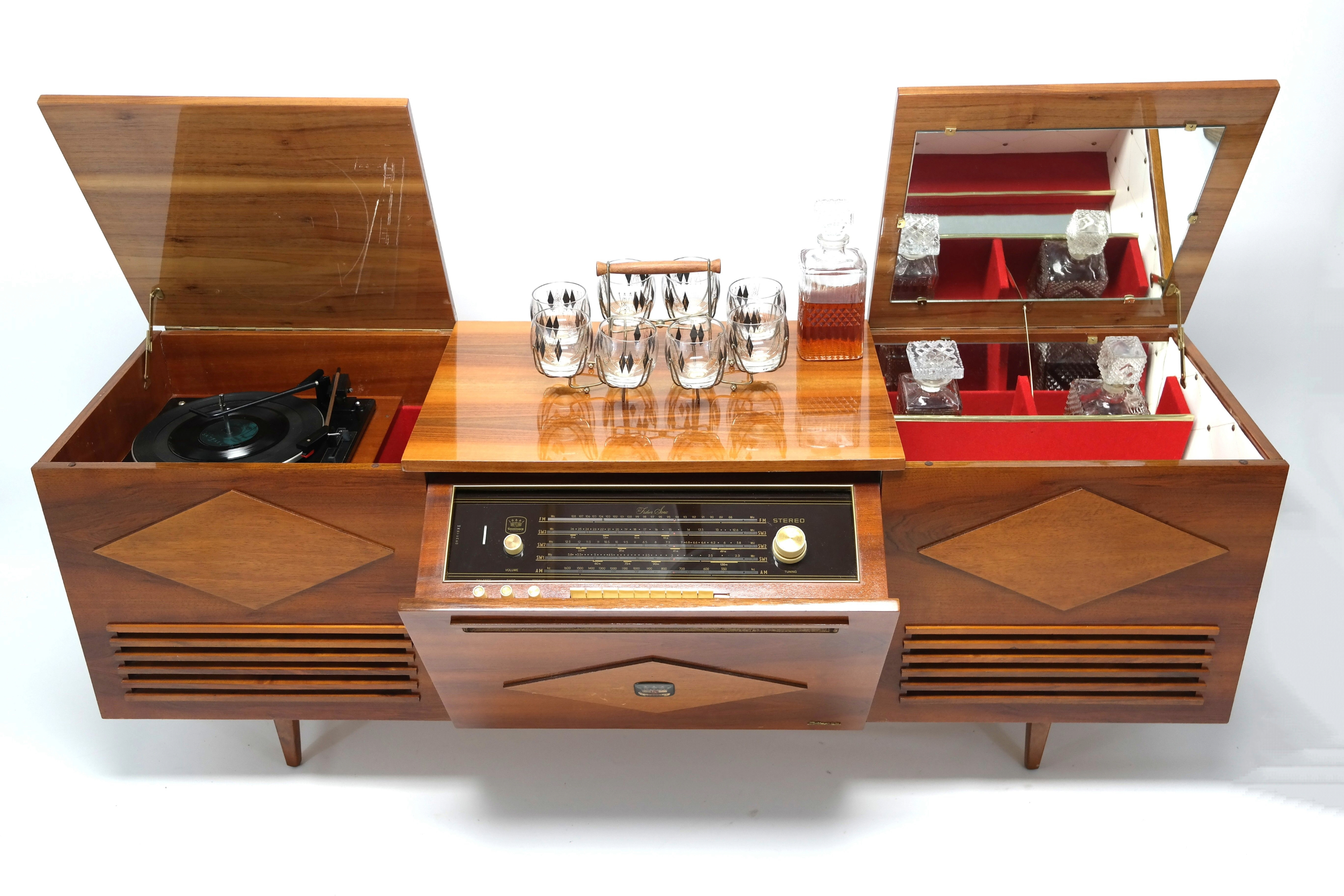
You remember the railroads in those days were actually pieces of furniture.
[00:03:37] Speaker D: That's right. Like the early television sets were too.
[00:03:40] Speaker C: Yes, I could. I remember saying we.
My father's memories are leaning up against the radio as a little boy and listening to my mother tell her about her years in boarding school.
[00:03:53] Speaker D: Now the radios, now the radios were full size floor models like Atwater Kent's Filco Zeniths, all those. And they, you know, they were big lovely looking pieces of furniture. Again, the early days of television they had that. Remember they used to have in television, they even had little doors on that you close so you didn't see the screen when you were not watching tv.
[00:04:19] Speaker C: Oh yes. And they have a variety of pieces and they'd be so ornate that probably you'd never see the same one. 12.
[00:04:25] Speaker D: That's right. You could use it as a bar, as a, you know, great stuff. And radio was like that too. We'd sit around this big floor model radio thing and watch it like we expected we're going to see something coming out of the speaker.
[00:04:39] Speaker C: Then there was the. I remember seeing the floor model and I also remember my father bringing home one of the. That old kind of a church look like one was around that you put on the top of the table.
[00:04:51] Speaker D: In fact it was called a cathedral model. The cathedral model, that's right. You know, I think that's the kind you're talking about.
That was a table model but it was still fairly good size but I mean nowhere near the size of the floor model. Then later on the radios got smaller and they were made out of baked light and they were relatively tiny. Although there were the.
The Museum of American History. I forget what it's called. It's in Lexington. They had a display one time at one of their exhibits about maybe three years ago was old time radios. And some of them were shaped like Coke bottles and all kinds of things.
We never bought any of that kind, but they were available too.
They came in all kinds of shapes and sizes.
[00:05:40] Speaker C: As soon as you were getting near the portable radios, the portable radio was there.
[00:05:45] Speaker D: Well, of course now you know, you buy little tiny things, you know, with transistors and stuff where they don't use the, they don't need much space because they don't use the big tubes and things.
But anyway, those were the days of radios when we'd all sit around and look at the big floor models and all enjoy the same programs.
[00:06:05] Speaker C: And family life was kind of brought around. The radio isn't exactly brought around. The television today.
I love listening to you.
[00:06:16] Speaker D: Well, thank you very much. I appreciate that, Joe. It's kind of you to call.
[00:06:20] Speaker C: Wow. Bye bye now.
[00:06:21] Speaker D: Bye bye. Okay, let's go to Sylvia in Canton. I keep wanting to sing that old song, who is Sylvia? Who is she? Do you know that song, Sylvia?
[00:06:32] Speaker B: I think it's who is Sylvia?
[00:06:34] Speaker C: What is she?
[00:06:36] Speaker B: I'm not quite sure what I am.
[00:06:38] Speaker D: That's kind of funny.
Who is she? Not what is she? But I understand that as I kind of. You're blurting out to me because you think I'm a psychiatrist and I'm to define you and see what a Sylvia really is.
That's a pretty name, though, Sylvia. That's nice.
I haven't seen a little kid named Sylvia in a lot of years. They don't name kid Sylvia anymore, I think.
[00:07:04] Speaker B: No, I know one other person whose name is Sylvia.
[00:07:09] Speaker D: A little kid?
[00:07:10] Speaker B: Not a little kid.
[00:07:11] Speaker D: No, that's what I mean.
I've got an aunt Sylvia and friends of mine were named Sylvia. But that's, you know, that's a few generations ago.
I don't know if any family that's named their little new baby born child there. Sylvia.
[00:07:29] Speaker B: Sometimes names go in cycles, but I guess.
I guess this is a non Sylvia cycle.
[00:07:36] Speaker D: I think so, yeah. That's too bad, because it's a very pretty name.
[00:07:39] Speaker B: Well, thank you.
I thought you might like to know a little bit more about Saint within, since it's his day.
[00:07:48] Speaker D: That's right. That's right. This is Saint Swithin's Day. Please do tell us.
[00:07:52] Speaker B: Well, he was the Bishop of Winchester, and on July 15th in 900 something or other, his relics were moved inside Winchester Cathedral. And it absolutely rained and poured that day.
And there's a legend, and the legend goes this way, Saint Swithin's Day. If it doth rain, 40 days shall be the same.
Saint Swithin's Day. If thou be fair, for 40 days,
[00:08:29] Speaker C: twill rain nae more.
[00:08:32] Speaker B: So we're in for 40 fair days, I think.
[00:08:37] Speaker D: Yeah, I guess we are. Because nobody's predicting any rain for today. And that's too bad, because things are drying out so badly. We do really need rain very, very badly.
[00:08:47] Speaker B: Well, it may be that this only works in England, so I don't know what's happening in England today also.
[00:08:56] Speaker D: I'm just looking at the forecast, actually, they are predicting a thunderstorm or two during the day and maybe a thunderstorm in the evening.
[00:09:06] Speaker B: Well, maybe that will count.
[00:09:08] Speaker D: I don't know yet.
[00:09:09] Speaker B: We'll have 40 days of rain then.
[00:09:11] Speaker D: Yeah. I wonder if, you know, when they're saying 40 days of rain, do they really. Does it really have to rain a lot? Like all day? Or can we have just a thunderstorm bursting up?
[00:09:22] Speaker B: Just a thunderstorm in the evening, you
[00:09:24] Speaker D: think would do it? That would qualify.
[00:09:26] Speaker B: That would qualify.
[00:09:27] Speaker D: Okay. Okay. Because the woods are so dry. I worry about that because I live back in the woods and at one time we did have a forest fire, a woodland fire.
And that's kind of scary when it's. That is great when it, you know, because there's no.
There are no sewer pipes or anything. I mean, that is water pipes back there. And it's really. It's really tough to put those things out. And you see it coming towards your house. It's not. It is scary.
[00:09:55] Speaker B: And you have so much livestock, too. I would be worried about getting them.
[00:10:01] Speaker D: Getting them out, I suppose. Yeah, the dogs. And I suppose we could. We could move them. But I'd worry about, you know, a flaming tree landing on the roof and it goes. The whole house, you know.
[00:10:13] Speaker B: Of course. Of course.
[00:10:15] Speaker C: Hey.
[00:10:15] Speaker D: You're so sympathetic, Sylvia. I really appreciate that very, very much.
[00:10:20] Speaker B: Well, I. Well, I really enjoy listening to you.
[00:10:23] Speaker D: Thank you, Brighton.
[00:10:25] Speaker B: Brighten up many evenings.
[00:10:27] Speaker D: I appreciate that. And I'm glad to know more about Saint Swithers. I knew he was a great guy.
[00:10:33] Speaker B: Thought that you would be just waiting in anticipation.
[00:10:37] Speaker C: I am.
[00:10:37] Speaker D: A little more. I am. I was waiting in anticipation, but I didn't know I'd be blessed by the full definition you have given us. You're okay and I appreciate talking to you.
[00:10:48] Speaker C: Okay. Bye.
[00:10:48] Speaker D: Bye. Thank you. Bye bye now.
Okay, how about we go to Hal, who's in a truck? You're in a truck, Hal.
[00:10:56] Speaker C: Yeah.
[00:10:57] Speaker D: Hey, how you do? How you do? Where are you? Well, I'm down here on the Southeast Expressway, northbound.
[00:11:03] Speaker C: Okay.
[00:11:03] Speaker D: Where. How far down are you? Oh, I'm down around where the Howard
[00:11:08] Speaker C: Johnson's used to be.
[00:11:09] Speaker D: Oh, okay. You're just coming up from around outside of Dorchester in that area while I was calling.
[00:11:16] Speaker C: You had a gentleman on back a
[00:11:18] Speaker D: while there that all I caught was he had some interest in comics and I was wondering.
[00:11:27] Speaker C: I had. I have those comics and I have Mad magazine, and I was wondering if
[00:11:32] Speaker D: I might be able to
[00:11:35] Speaker C: maybe get. Get in contact with him somehow.
[00:11:38] Speaker D: I guess he was Talking about old radio cassettes of old radio comics. Is that, is that what you had in mind?
[00:11:45] Speaker C: No, these are the comic books he mentioned. Action Comic.
[00:11:48] Speaker D: Oh, yeah, he said he had. Said he had a whole bunch of them and then when he went to service, his mother threw them out, including volume one of, you know, some of the.
One of the ones that, that is worth so much today. Yeah, well, my mom didn't throw mine out. Oh, she didn't?
[00:12:05] Speaker C: No.
[00:12:05] Speaker D: Now what kind of a collection do you have then? How far back do they go? What do you have?
[00:12:11] Speaker C: I've got all the MAD magazines.
[00:12:14] Speaker D: All the Mad magazines, All magazines.
[00:12:18] Speaker C: The only problem is they've been thumbed through two or three times each, you know, and not, not too, too bad.
Still, they still look as good as they did when they come off the shelf.
[00:12:31] Speaker D: So you have, you actually have the very first edition of MAD magazine. Oh yeah, no kidding. Now how many? You must have a ton of them because they've been out for a lot of years.
[00:12:40] Speaker C: I got about 60 of them.
[00:12:42] Speaker D: Wow.
[00:12:44] Speaker C: Total.
[00:12:44] Speaker D: And got the action, the action comics there.
[00:12:49] Speaker C: I've got the, the first seven volumes of that.
[00:12:55] Speaker D: That was kind of a slow magazine.
[00:12:56] Speaker C: I didn't have much interest in it, but I suppose I should have.
[00:13:00] Speaker D: Yeah, it maybe may be tremendously valuable right now. Okay, I'll turn you over to Hope Shower and she can take your name and address or phone number, however you can be reached, whatever you'd like.
[00:13:13] Speaker C: Okay. No, it's just a post office box.
[00:13:15] Speaker D: You can drop me a cat. Okay.
[00:13:17] Speaker C: I'm not home very much.
[00:13:18] Speaker D: Okay, that'd be fine. And if he calls back, we'll give him your post office box number then.
[00:13:23] Speaker C: Okay. And I have a question for you.
[00:13:25] Speaker D: Yes?
[00:13:25] Speaker C: What do they call a boomerang that doesn't come back?
[00:13:31] Speaker D: I don't have any idea.
[00:13:32] Speaker C: A stick.
[00:13:34] Speaker D: Okay.
That is. That's another one of you. And all those worst jokes I ever heard.
Anyway, here's, here's Hope Shower. Thanks a lot. And we'll take some more calls in just a bit. 2, 5, 4, 10, 30. Our area code is the very lovely. And Saturday, one week from today, from noon until 4:00 clock in the afternoon, probably say. I would guess you'll see a lot of the WBC people who'll be there at that time and whatever donations are taken in and so on go to Benefit Children's Hospital, which has been a favorite fund of people here at WBZ for a very long time. A couple of other things, then we'll take some calls. Okay.
We'll talk Sports tonight at 11 with a man who has written a number of books that explain sports to the average layperson, which is most of us.
Basic rules to force for sports illiterate people in the sports of baseball, football, basketball, hockey and soccer. When probably will be giving away some games too. Some. Some. Some books.
Bob Barry Dreyer is the man we'll be talking with. And then right after that we're going to talk about Lovers Lanes. I thought there were no Lovers Lanes anymore in this 1995 society because everybody seems to have their own apartment or something. Or maybe not.
So you didn't have to go parking in cars the way we used to at one time trying to find some secluded spot.
J.M. lawrence wrote about all of this in her column last Sunday in the Boston Herald. And we thought it'd be kind of fun if you had a chance to hear her talk about.
Was entitled. The piece was entitled Forever Young on Lovers Lanes. The you come closer. I don't want everybody to hear this and you may not be ready to make that kind of a confession, but did you ever want to go parking. Did you ever go parking on Lovers Lane?
[00:15:33] Speaker C: Or.
[00:15:34] Speaker D: I don't know whether your town had a legitimate lover's lane, whether it was really called that. Usually it's parking like along the Charles river on. Off Mass Avenue in Boston where. Or the reservoir up in Brighton. That used to be a very popular spot.
Or sometimes you take the woman, the girl, just a girl then to a drive in theater and you could neck.
We felt so daring back then. But apparently there's still Lovers Lanes and people still go there and they still risk the chance of some.
Some geek coming by with a flashlight, flashing it in just to be cute.
And then anyway, on Sunday night we'll be talking about the circus. Bruce Filer, who's author of under the Big A Season with the Circus, we'll be talking about that he joined the largest tent circus in the world as a clown. He'll be talking about what goes on behind the scenes and in the lives of such people as the human cannonball, the trapeze artists.
And if we behave ourselves and drink our milk to the bottom of the glass where Snow White is looking up at us, maybe he'll even tell us some of the tricks of the circus trade.
And that's my story. Thank you just so much.
[00:17:02] Speaker C: YWBZ in the morning.
[00:17:04] Speaker B: If you want to get up and get the information. That's exactly what we do.
[00:17:07] Speaker D: Dib Lawler.
[00:17:08] Speaker B: We give you. You the information quick down dirty. We'll give you news, we give you sports, we give you weather and we give you, most importantly, I think sometimes on a Monday morning, traffic, when people
[00:17:16] Speaker C: get up at 6 o' clock in the morning and the radio goes off or they've got their radio on in the car driving to work, Gil said
[00:17:22] Speaker D: to us they know full well that
[00:17:24] Speaker C: we've been up several hours before them gathering whatever it is we have to gather to tell them what happened the night before. We're going to give you what you
[00:17:30] Speaker D: need to know straight on Gary lapierre. There's also no bull, not going to harass you.
[00:17:35] Speaker C: We're not going to debate with you. We're not going to get confrontational. We're going to give you only what you need to know, get you on your way and we're not yelling at people, you know, we're not hanging up the phone on them, we're not insulting them. We're giving you the nuts and bolts of it to the best way that we can come up with all the information that you need without hammering people over the head with it, without being wise guys.
[00:17:53] Speaker B: I think there's only one other thing you need in the morning and that's
[00:17:55] Speaker C: a cup of coffee for news and information.
[00:17:58] Speaker B: People know where to turn to get it.
[00:17:59] Speaker C: The only place to be in the morning.
[00:18:01] Speaker D: They're on a matter of choices.
[00:18:02] Speaker C: There's only one place.
[00:18:03] Speaker D: WBZ News, 10:30.
Okay. The time is 4:33. Norm Nathan here at WBZ. Do you think, do you think the, the press has made a much. Not just the press but news media in general made, made a much bigger deal about Hugh Grant than they should have. This is the. The guy who allegedly encountered a Hollywood prostitute and paid her for.
I hate to say this, my mother would wash my mouth out with soap. She caught me saying it paid her for sexual favors which they, which he received in a car because supposedly he couldn't afford the full rate to go to the hotel or something like that. I think what he did was really kind of stupid. A man in his, in his position. But we've been making such a big thing about this as though the world has come to an end because of what he did. I think maybe we, we tend to be a little bit overly moral about these things. Hold on a minute.
Again, I just brought it up too. So if I don't think it's such a big deal, why did I bring him up? Sure. Answer me that if you will, please. Thank you so much.
Okay. 2, 5, 4, 10:30 area code is 61 7. Go to the phones now.
And talked with Golda. Hello Golda, Good morning.
Who is suggesting that people who are part of of that group, the Sampson Air Force Veterans association can write to this address if they'd like information about that. This is for the reunion at the Sheridan and ithaca, New York, September 14th through 17th. I think Don called and wondered if there were a lot of it said there were a lot of people veterans around here who he hoped would show up at that reunion but he wasn't sure how to get in touch with them.
So if you want to get in touch with him it's or the the group. Samson Air Force Base.
No. Sampson Air Force Veterans Association.
Post Office Box 299. 299 Interlocken I N T E R L A K E N Interlock in New York.
148-471-4847.
If you didn't catch all of that and you're curious as to what the address is again and domestic, just send me a note and I'll be happy to send that along to you. Including Dr. Garlock's address in Lynchburg, Virginia.
And apparently he's one of those who is planning this and putting all of this together.
Okay, thank you very much. Okay, come on. 254-1030 area code 61 7.
Very quiet night, so I'd love to hear from you. The following is a commercial message.
[00:21:01] Speaker C: Attention. For an important message from Silver City's
[00:21:04] Speaker D: Department of Credit Approval. Due to favorable economic conditions and strong relationships with national lending institutions, the Department of Credit Approval can help you begin to re establish your credit and put you in the new car you really need. Regardless of your past credit history. Divorces, tax liens, civil judgments, even bankruptcies and repossessions. Our credit approval specialists will work closely and privately with you to put you on your way in the car you
[00:21:30] Speaker C: want with the credit you deserve.
[00:21:32] Speaker D: No down payments and no payments till next year will be available to all who qualify.
And when you trade in your car, we'll give you our maximum trade in allowance regardless of condition. One designated northeast location will handle all credit consultation and approval. Now through Monday, only Silver City Ford, Hyundai Coachman and Silver City dodge Toyota Route 44 Raynham. Exits 13A and 13B off Route 24
[00:21:58] Speaker C: must qualify for offers. Bankruptcies must be discharged.
[00:22:02] Speaker D: Okay, let's go to Charles in Belmont. Hi. Good morning, Charles.
Why?
He's dead.
Okay, we'll go to Stan and Newton then instead. Hi, Stan. Good morning.
[00:22:14] Speaker C: All right. How are you doing now? Fine.
[00:22:16] Speaker D: Thank you. How about you?
[00:22:17] Speaker C: Good chow. Sounded like a dial tone.
[00:22:21] Speaker D: Yeah, that's. Apparently he does that at parties and stuff. He's the only. The only human being who can make his voice sound exactly like a dial tone. That's amazing.
[00:22:29] Speaker C: He did real good. Yes, I just. Just getting ready to go to work. I have a paper route, so I'm just getting ready to go. And I was just wondering, your conversation today, what was it about? Sports, Wrestling.
[00:22:41] Speaker D: You know, we just. Well, that last one was about wrestling, but we. We talk about most anything you'd like to talk about.
[00:22:47] Speaker C: Yeah, I know. You brought back, as usual. Your show usually brings back some old memories, like the roller derby, when it used to be held down in the arena and everything.
I think most of the old sports are. You know, they were true sports at the time. I think the. Now the quantity of the, you know, the sports of the baseball teams. You got so many teams, you can't even name them. Not name the players. You can't even name the team.
[00:23:09] Speaker D: It's kind of hard to name all the players on the Red Sox team these days. Oh, I know. They keep getting new ones all the time.
[00:23:15] Speaker C: I know. I think that the basic things are still there. It's just that the quality of it has just gone down.
[00:23:21] Speaker D: Well, you know, I was mentioning wrestling because I used to do wrestling belts on radio about a million years ago. They were. The professional wrestling posts were as phony then as they are today. They were all. It's all showmanship. And a lot of people, even though. So understand that it's not. They're not quite legitimate.
[00:23:39] Speaker C: Go ahead. I go back, you know, in the 50s, and, you know, you had. Even on TV when they started coming on the old Gorgeous George and Argentina Rock or some of those things, you know, they started to bring in the showmanship of it and.
[00:23:54] Speaker D: That's right.
[00:23:54] Speaker C: You know, I think, you know, people don't realize the ability to do something on the radio, even to report a baseball game.
[00:24:03] Speaker D: Yes, it is. It is. No, there's a great deal of skill. What papers do you deliver, by the way? Stan?
[00:24:08] Speaker C: Can I mention it?
[00:24:09] Speaker D: Sure.
[00:24:11] Speaker C: Okay.
[00:24:12] Speaker D: What do you. Do you have a big route?
[00:24:14] Speaker C: Yeah. Paper.
[00:24:14] Speaker D: Yeah.
[00:24:15] Speaker C: 189 papers every month.
[00:24:17] Speaker D: No kidding.
[00:24:18] Speaker C: Yeah.
[00:24:18] Speaker D: That keeps you busy.
[00:24:19] Speaker C: Yeah, it does.
[00:24:20] Speaker B: Yeah.
[00:24:20] Speaker C: But it's good. What the heck, you need the money, you got to do it.
[00:24:24] Speaker D: I guess so.
[00:24:25] Speaker C: But like you said, the wrestling and the. Most of the sports. I remember one show you have talking about old things when you used to name all the old nice names at the Eddas, like the Rialto and Strand and things like that.
[00:24:38] Speaker D: Oh, that's right, that's right.
[00:24:39] Speaker C: Now it's cinemas 1 to 85.
[00:24:42] Speaker D: I know it. And there's sort of a glamour that's missing.
[00:24:45] Speaker B: Yeah.
[00:24:46] Speaker C: And it's not at the end of anymore. They're cubicles now.
[00:24:49] Speaker D: They really are. They're like little shoe boxes. Yeah, no, that's true.
Anyway, when do you start? You ready to go out there and deliver the stuff and bring the news to the folks there?
[00:24:59] Speaker C: Five, 30.
[00:25:00] Speaker D: Yeah, okay.
[00:25:01] Speaker C: All right, then.
[00:25:02] Speaker D: Hey, thanks a lot for the call. I appreciate hearing from you. Okay.
[00:25:05] Speaker C: To have you have an empty line.
[00:25:06] Speaker D: I know, me too. And I appreciate you filling one in now like that. You're okay.
And we'll go to Chris in Nashua. Hi, good morning.
[00:25:14] Speaker C: How you doing, Norm?
[00:25:15] Speaker D: Good, thank you.
[00:25:16] Speaker C: I love, love calling you about the same time every day.
[00:25:19] Speaker D: Well, I appreciate that very much.
[00:25:20] Speaker C: I'm the guy that called, I don't know, a month or two ago and I don't know, it's asking you how to get in the broadcasting business.
[00:25:27] Speaker D: Oh, yeah, and I thought you said.
[00:25:29] Speaker C: I don't know why, you can give me a few suggestions. Like every time I think of it, you know, I want to go to a school or something, but then I get, you know, kind of, you know, hung up at work and I never made the call.
[00:25:41] Speaker D: Yeah.
So you're still. You're still interested then, huh? In the business?
[00:25:45] Speaker C: I was on the Arne Ginsburg show.
[00:25:48] Speaker D: Oh, you were on the Arne Ginsburg show.
I'm sorry, is that what you said?
[00:25:52] Speaker C: Yes, yes.
[00:25:53] Speaker D: What did you do on the Arnie Ginsburg show?
[00:25:55] Speaker C: We went to a Red Sox game that night. And then afterwards we went in to see one of your colleagues who does his talk show. After. After the Arne Ginsburg show. You might know if I mentioned his name.
[00:26:04] Speaker D: Yeah, mention it.
[00:26:05] Speaker C: Well, you know Jerry.
[00:26:06] Speaker D: Oh, yeah, sure.
[00:26:07] Speaker C: At his studio, you know, over there on.
[00:26:09] Speaker D: They were on wmex.
[00:26:11] Speaker C: There you go.
[00:26:11] Speaker D: On Brookline Avenue. Oh, yeah, yeah, sure.
[00:26:14] Speaker C: And right next to his studio. Well, Arnie Ginsburg show would end and then Jerry would come on at 10 o'. Clock.
[00:26:19] Speaker D: Oh, yeah.
[00:26:20] Speaker C: But we went in there after Red Sox game one night.
My father and my mother and I sat in a little audience. It was like a little studio audience.
[00:26:28] Speaker D: Oh, yeah.
[00:26:29] Speaker C: And then after that, we went to the Arnie Ginsburg show afterwards.
[00:26:32] Speaker D: Oh, yeah.
[00:26:33] Speaker C: And just kind of turned on a fascination, you know.
[00:26:37] Speaker D: Boy, because you're really going back a few years, aren't you with that boy? That's about the year one. I think that Arnie was doing a show out of WMEX back in those days.
[00:26:48] Speaker C: I didn't know that.
[00:26:49] Speaker D: No, no, Arnie was.
Arnie and I worked together even before then, before he even got on the air as a disc jockey, was an engineer at that time.
And yeah, that was like back in the. And I know you're not going to believe there was such a year, but it was back in the late 40s and he.
No, I know it.
[00:27:08] Speaker C: You.
[00:27:08] Speaker D: I don't. If I were your. I think at your age, I wouldn't have believed there was such a decade.
But, but he used to, he used to. He always wanted to get on the air too, and see, he made it. So there's no reason why you.
[00:27:21] Speaker C: Yeah, I've heard University of Minnesota. They say you ought to study, you know, politics and history, if nothing else, you know.
[00:27:30] Speaker D: No, I, I agree with that. I think you ought to get the best possible education. And if you can get it at a school that has a radio station and just fool around with the radio on the side, I'd really get a great liberal arts education primarily. I think that that is a much better way to do it.
[00:27:46] Speaker C: All right.
[00:27:47] Speaker D: Hey, you gotta follow my advice and you're going to enroll in Harvard this, this fall just to be the bull by the horns and, and do it,
[00:27:55] Speaker C: do it, do it.
[00:27:56] Speaker D: Take care, Chris. Thanks. Thanks for the call.
Mike in Boston. Hi, good morning, Mike.
[00:28:01] Speaker C: Hi, Norman. Yes, I'm a first time caller to any radio show that I've ever called.
[00:28:06] Speaker D: Hey, and you, you. You used me. You called me the very first one. I'm flattered.
[00:28:11] Speaker C: That's right. And I've been listening to the radio for a long time. And your style and your gracious manner has everything to do with why I called. I tend to be so put off by the plethora of shows out there that seem to be sort of asking for people to argue with the person who's on the air such that the people who are arguing with them can be sort of made fools of. And that doesn't seem to be your style at all.
[00:28:39] Speaker D: Well, no, I don't, actually. The person on the air really has the advantage because you can start yelling. I could. For example, I could turn your.
This is a toggle switch I have. I could turn it down so that you can hear me. But you would not be able to speak.
[00:28:53] Speaker C: Right.
[00:28:54] Speaker D: I mean, you'd be able to speak, but nobody would hear you. I mean, we have all the advantages here. And I think it's unfair for anybody who's a talk host or anything like that to take advantage of that.
[00:29:03] Speaker C: Well, you know, I just. Just in reference to the. The last call, because I just heard it on, you know, on the phone coming through before you put me on. But the person was asking about getting educated in radio.
To my mind, from listening to radio all these years, one of the best education I could think of is listening to your program.
[00:29:19] Speaker D: What a nice thing to say, because
[00:29:23] Speaker C: you've commented yourself that it is live. And I don't think people stop to think about that because that really isn't very much the case anymore on radio.
You know, the music programs that most people listen to and take for granted are largely not live, including the announcers, voices that you hear. It's all programmed.
[00:29:43] Speaker D: Well, in many cases, that's quite true. Yes.
[00:29:46] Speaker C: And it really, you know, for someone like myself, who's not been around all that long, but have been around long enough to see the transition, that if you listen really closely, you can appreciate the difference between the sense of really interacting with someone who's there. I really missed the chance to. In the days before, you used to be able to call in and make requests of a live, you know, DJ and that sort of thing that seems to have largely not been available. Because you call a number, of course, especially late at night, and the telephone is. The published number is not answered and all that sort of thing. There's no way you can really get to the person in the studio.
[00:30:24] Speaker D: No, that's true. Not unless he has a special line and he, you know, he gives you the phone number and encourages to call. But most of the time they don't because the music is pretty well programmed ahead of time.
And they're not about ready to make any changes at all in that.
[00:30:39] Speaker C: No, but I, you know, I do appreciate the fact that you're one of the last bastions of old radio personalities and. And I say that, you know, in. In a complimentary way.
[00:30:48] Speaker D: I don't know. I know you do it.
[00:30:49] Speaker C: People have been criticizing, for example, the Birthday Show. I find that a hilarious hour. And the only thing that I sort of think of that if I were to think of any potential suggestions for changing it, they'd only be along the lines of perhaps expanding the idea to have. And it's probably totally unrealistic because you know more about the possibilities than I do. But with your background in jazz and all that sort of thing, it almost occurred to me that it would be fabulous if you had some sort of an in studio musician or pit orchestra.
[00:31:24] Speaker D: I would, I would love that.
[00:31:26] Speaker C: You know, your sort of freewheeling style. I think it would be the perfect.
[00:31:30] Speaker D: I would love that. The thing is that we don't have a music license here at bz. They dropped it. It's kind of an expensive thing to have.
[00:31:37] Speaker C: Yeah.
[00:31:37] Speaker D: And they figure this bill. We're dealing with some delays in the expressway. Northbound right now from just about the Columbia Road area into the South Station to tunnel lower deck of Route 93. Traffic still heavy back to just about community college. Traveling outside of the city, we've got just some short delays. Route 95 northbound towards the Hampton tolls in New Hampshire to the south of the city. Route 24 southbound work cruise by Harrison Boulevard and Avon. Have the off ramps there shut down and some heavy delays through that stretch. Also Traveling on Route 3 southbound.
[00:32:07] Speaker C: Still some delays.
[00:32:07] Speaker D: In Kingston. I'm Jack Hart, WBZ 24 hour traffic network. Star Market has everything you need for summertime barbecues. This week at Star Fresh boneless skinless chicken breasts are specially priced at $1.99 per pound.
Get 32 ounces of delicious hazelnut or French vanilla iced coffee in our refillable summer sipper. Just $2.69 at participating shops while supplies last baseball, basketball, hockey and football.
I guess I love soccer, but I'm not sure whether we'd call that a major sport yet or not. But anyway, Barry, it's nice to have you with us. The books are fascinating.
[00:32:48] Speaker C: Oh, thank you, Norm. Okay.
[00:32:50] Speaker D: There are a lot of us sort of think we know a little bit about some of the sports, although some of the sports were kind of vague about.
But you, you explain them so nicely like textbooks. Teach me sports. You do this as part of a seminar also. Is that how the books came about?
[00:33:08] Speaker C: Right. We started putting seminars on in Atlanta, Georgia, software to CPAs for a company in Atlanta, Georgia. And we had a lot of female sales reps who were selling to middle aged CPAs, male CPAs mostly. And they had a tough time establishing the rapport that's needed in sales in sports. It's such a great icebreaker preceding a business discussion. You know, it's the most non threatening way to have small talk is to talk about last night's game or if you can find out what a prospect's favorite team is and just get into talking about sports and, and then that'll lead you directly into the business at hand.
[00:33:58] Speaker D: Okay, you, because you've done a lot of TV and radio programs as A result of this as guest and all of that talking about sports.
And the series is published by, it says General Publishing Group. Are these are the books generally available? Most every place. Do you know?
[00:34:18] Speaker C: Yes, they're in bookstores and sporting goods stores across the country.
In fact, a friend of mine was up in.
Is it Copley Square?
[00:34:30] Speaker D: Well, you can call it that. We call it Copley, but.
[00:34:35] Speaker C: And he walked by and there the books were in the display window at one of the bookstores there.
[00:34:42] Speaker D: Well, that's great. When did you write these? Well, these are all within the past year or so, right?
[00:34:47] Speaker C: Within the past 12 months.
[00:34:48] Speaker D: Isn't that, isn't that nice? And okay, they're called Teach Me Sports. They're paperback and they're only, what, 7.99 each, which is pretty cheap considering the price of what books are these days. And if you want to be knowledgeable about, I, I can hardly wait to, to get to read more about these things. I read some of it up to this point. Baseball is I feel very comfortable with because when I was a kid, that was about all there was.
We had no professional football and soccer. You never even thought about soccer. There was no professional basketball. Celtics were not around at that time.
And that makes me sorry. I grew up around the times of the Civil War or something. But it was only baseball and, you know, so all the kids were very much involved in that. But I haven't become interested in some of these other sports as well. And your books are a tremendously nice guide to the finer points of all these things. And I think not only, as you point out, is a great icebreaker by knowing these things, if you're dealing with somebody who's a sports fan and you know what to say to them.
But I think also just so you can enjoy it gives you another dimension for enjoying sports and knowing what you're talking about.
[00:36:04] Speaker C: Well, one thing I also did in the Teach Me Sports series was to on the odd number pages of the books is where we go into the descriptions of the different rules and strategies and positions. But on the even number pages across from them bring up anecdotes or quotes that illustrate some of the points. Well, my favorite one was in baseball in 1962, Gaylord Perry, you know, the hall of Fame pitcher, right, when he was taking batting practice for the first time as a rookie, his manager looked at his swing and said, the day Gaylord Perry hits a home run, we'll have a man on the moon. Well, July 20, 1969, when Neil Armstrong took that first small Step on the moon. Gaylord Ferry hit his first home run.
[00:36:51] Speaker D: That's fascinating.
[00:36:53] Speaker C: Team handball or water polo. That could lend itself to a Teach Me Sports edition.
[00:37:02] Speaker D: And of course, on television, where they're looking for sports, they got some weird one. You wouldn't have one on wrestling, I don't see any point to that. Professional wrestling, which is what we. I'll say it softly in case there's a professional wrestler who's driving around near the studios here. But it's kind of a fraudulent sport to begin with.
And then they have the gladiators and they have. What are they calling a beach volley. So you can kind of theme is supposed to drive you into a sexual frenzy.
[00:37:34] Speaker C: Well, I'm not going to discuss that on the radio, but.
[00:37:36] Speaker D: Well, I just did.
And what do you get to lose? It's my program. Of course, that can happen as my career comes to a crashing halt, but it hasn't been much of anything anyway, so what the heck.
[00:37:47] Speaker C: Oh, I don't think.
[00:37:48] Speaker D: But isn't that interesting? You know when I thought, you know when you're traveling along and you get the car radio, normally the people who have their car radios on really so loud you can. It's almost like a PA system. It's always, you know, a rock station.
[00:38:02] Speaker C: Yeah.
[00:38:03] Speaker D: So wouldn't it be wild if you traveled along listening to classical music with a radio turned up? Real wild.
[00:38:10] Speaker C: Funny that you mentioned that, because once again, I do do that. My friend and I, we. We. We get a lot of looks driving down the road, but that's pretty much why we do it. We'll just turn it up all the way, roll down the windows, I'll hang my head out the passenger window and basically that's what we do for fun,
[00:38:30] Speaker D: I would imagine. I don't know, maybe a lot of people would even complain about that. They're just not used to that. They just get amused and that kind of stuff.
[00:38:38] Speaker C: Yeah, I just go to the beat of a different drummer, I guess.
[00:38:41] Speaker D: But to know what I'm listening to, which is usually straight. This sounds like you're. Something you expect me to say, but it usually is WBZ because I'm catching up on the news or the talk or see what's. We see what's going on.
[00:38:54] Speaker C: Gary lapierre, whoever.
[00:38:55] Speaker D: Oh, yeah, whatever that is. And I. I automatically turn it down like this is a private experience I'm having between myself and the radio and the station. And they must not be. They must not listen. I don't. I just. An automatic.
[00:39:09] Speaker C: And I always Felt like that, you know, that. That once someone knows what you're listening to, then they make judgments about you. I mean, quite honestly. I mean, I always figured, you know, I'll listen from anything to today's heavy metal to something, you know, like, you know, Gershwin or Ravel or, like, anything like that.
[00:39:24] Speaker B: And.
[00:39:25] Speaker C: And I've. I used to always be afraid to, like, admit my uncle is a classical freak himself, and he would come up to me and say, you know, do you ever listen to anything like this? And I, you know, immediately become defensive and like, no, of course not. I don't know what you're talking about.
And even still, if I'm listening to a CD while I'm going to sleep, you know, I'll turn it down really low so, you know, like, my brother won't find out. Like, you know, that I'm. That I'm weird or something.
[00:39:47] Speaker D: You must have more confidence in yourself because you sound like a really sharp guy. Now, are you waiting to go into college or you already.
[00:39:53] Speaker C: I'm on my way to Middlebury College in the fall.
[00:39:55] Speaker D: Oh, really? Oh, that's exciting, isn't it?
Oh, now, what would your major be? I know you don't have to have a major, right?
[00:40:03] Speaker C: I'm looking to most likely English, but I'm really not sure yet.
[00:40:07] Speaker D: You want to be a writer or a teacher or what?
[00:40:09] Speaker C: Pretty much a writer, yeah. But I'm also active in theater and music and stuff like that.
[00:40:16] Speaker D: You sound like the kind of guy I wish were my son. Can I talk to your folks maybe?
[00:40:20] Speaker C: Oh, I get that way too much.
You know, your son, you know, all parents would love to have him as a son. You know, he doesn't do anything wrong. You know, he gets all those good grades and he's just such a nice kid.
That's pretty much the kiss of death. If you want to be cool these days.
[00:40:38] Speaker D: I say, I suppose so. I suppose so. But, see, I have daughters. I don't have sons.
[00:40:43] Speaker C: And.
[00:40:43] Speaker D: Okay, I'm not going to push it because obviously it's distasteful to you, but. But you sound like you'd be kind. I'd like to. I want to take you to baseball games. I want to.
I want to sit and talk with you. I want to listen to Ravel's ballet. Well, not with you. Maybe that. Oh, no, no, no, no. That doesn't sound like a good idea.
[00:40:58] Speaker C: Maybe something a little tamer, you know?
[00:41:00] Speaker D: Oh, yeah. Let's see. How about the.
The Inter Meso from the Cavalieria Rusticana by Pietro Mascagi. I just wanted to say that because I love the way it makes my gums feel.
Yes, you do. Hey, Brian, thanks a lot for the.
[00:41:15] Speaker C: All right. It's been a pleasure.
[00:41:16] Speaker D: Been a pleasure talking with you. Take care. Bye.
[00:41:19] Speaker C: Bye.
[00:41:19] Speaker D: Because he had an orchestra, too, and he wrote the song, that one. And. No, that was. That was Aquaviva, who was married to a vocalist who was terribly popular during that time, even though she could hardly sing in tune. Her name was Joni James. As I see now, I'm just really digging deep into my memory for all of these things.
[00:41:43] Speaker C: Right, right. You don't remember who's. Whose version that was. It was the theme.
[00:41:49] Speaker D: No, you may be right. It might have been Gordon Jenkins, but I would have thought it would have been Aquaviva since he wrote the song.
[00:41:55] Speaker C: Okay.
[00:41:56] Speaker D: His name was Tony Aquaviva. I wish I loved that name. I thought, boy, that has a name with character.
That's right. Coming up in Midnight.
[00:42:04] Speaker C: Long, long time ago.
[00:42:05] Speaker D: Yeah. Coming up to midnight. B U L O V A Watch time.
[00:42:11] Speaker C: Nice to.
[00:42:12] Speaker D: Now, were you. Are you still in radio, Ted?
[00:42:14] Speaker C: No, no, I'm out. I'm. I'm earning an honest living now.
[00:42:18] Speaker D: Oh, shame on you. Shame on you.
[00:42:20] Speaker C: But, you know, it, It. It. Your. Your. Your program takes me back many, many years. And I remember one time I was doing a Sunday afternoon show at wei and. And we had this young intern in. And I. His name escapes me, but I said, well, why don't you do the next commercial?
And, you know, I give him this big break in radio.
[00:42:52] Speaker D: What a kind person you were.
[00:42:53] Speaker C: Yeah, but it was. It didn't turn out that way as he is reading the commercial copies straight, you know, and I wish I could remember what it was, but I took out my package of matches. In those days, you could. You could smoke in the studio.
And I took out my package of matches and I struck the match. And of course, he thought I was going to light my cigarette, but I lit the copy.
[00:43:21] Speaker D: We used to do that a lot. We'd say. Somebody would say, here's the news, hot off the wire.
And as they were saying, hot off the wire, we set fire to it. You know, there used to be a lot of that kind of stuff, and we've become very serious in the business. Nobody fools around like that anymore.
[00:43:36] Speaker C: I know it.
[00:43:37] Speaker D: Can you hold on till after the news? Yeah, Ted. And we'll talk some more then, because I'd love to talk with you.
[00:43:42] Speaker C: Yes.
[00:43:43] Speaker D: Okay.
[00:43:45] Speaker C: Just makes me glow each weekend night.
He's beyond compare.
And so debonair.
He shines so bright.
You're on BZ
[00:44:09] Speaker D: 103.
[00:44:11] Speaker C: Oh, please don't turn that dial.
He makes me smile.
[00:44:42] Speaker D: About lovers lanes. And we were wondering, do they still exist? And apparently so, because as you heard, J.M. lawrence, a lot of people have called to mention the fact that they still kind of go parking a little bit. So that's kind of nice.
[00:44:57] Speaker B: It's still happening. Not to the extent that it was in one day, but it still happens today.
[00:45:03] Speaker D: I'm delighted about that. Let me introduce you to Ted. Ted Bear. Hey, Ted.
[00:45:08] Speaker C: Hi there.
I'm not familiar with that.
What's a lover's laden horn?
[00:45:19] Speaker D: Oh, come on, you. You lecherous human being. You know what that is?
[00:45:25] Speaker C: Well, we. We did. We did occasionally take a trip out to Nahant beach, but, you know, that was. That was fun.
[00:45:34] Speaker D: Well, that was good, too. All the. Or in Revere, down at. What is that? That end where the roast beef place is?
Kelly's Roast Beef, Point of Pines. That was a spot.
[00:45:45] Speaker C: Yes, yes, that was nice.
[00:45:47] Speaker D: As a matter of fact, we'll talk with JM Lawrence in a little bit. And she's got a number of about 10. 10 parking spots around greater Boston, which apparently is still used by people.
Why are you laughing? Has romance totally eat oozed out of your soul?
[00:46:04] Speaker B: I think you need some suggestions, Norm.
[00:46:09] Speaker C: I love romance. I think it's very important.
[00:46:11] Speaker D: Are you married now?
[00:46:13] Speaker C: Am I. Yes, I am.
[00:46:14] Speaker D: Okay.
[00:46:15] Speaker C: I've been married for 112 years.
[00:46:17] Speaker D: Are you married?
I feel funny about asking you this. Yeah, but at one time you were married to a cocktail drummer.
You know. You know who I'm talking about. Isn't that stupid? If you don't know, who would know? Yeah, well, you're not married to that same person.
[00:46:35] Speaker C: No, no, no.
[00:46:36] Speaker D: Okay. Because that. She was very, very attractive. That goes back a few years. Yeah. Okay, so you've been married to somebody else for a long time.
[00:46:43] Speaker C: That goes back when we had orchestras in studios.
But that's another story, another time. Anyway, you know, really, what I. What I called to.
To talk about was to.
To express my appreciation for your program.
[00:47:02] Speaker D: Well, thank you very much, old guy.
[00:47:05] Speaker C: You know, as you said, everything is serious today, and there's not much levity on radio. And I think. I think it should be. I think there should be times. I've decided I'm going to give Norm a call and tell him the people count. And my wife said, please, please, they're. The fellow with the white suit is
[00:47:24] Speaker D: to going so what? He might get a kick out of it too. Yeah, but what we do for.
I was going to say for people who are wondering. I said, probably not wondering because I do it so much. But the sound of the. The spring peepers mating.
[00:47:37] Speaker C: Yeah.
[00:47:38] Speaker D: Is the first vocal sound, the first sound of spring. And that happens around April 1st. So I tape them from the marshes and the wetlands that are near my house and we play them and there's, you know, there's a sign of spring, which is a kind of a nice sound after a long winter.
[00:47:55] Speaker C: I know we have wetlands. We have wetlands near my house. Every time I go by when I hear that sound, I said, good God, Norm Nathan. That's all I could think about.
[00:48:06] Speaker D: I hope that that is my legacy. Do you think one day it'll be. It'll be on my grave.
[00:48:12] Speaker C: Your legacy is bringing levity to Boston radio and to giving enjoyment to millions of people.
As I say.
Well, it's unfortunate that you're only on a couple of days a week, except when Bob is on vacation.
And I thoroughly enjoy that.
[00:48:33] Speaker D: Well, I appreciate that at this stage of my life. I think it's amazing I'm still on it all, even for a few minutes. I appreciate that, Ted. Well, would you call me another night and we'll talk more about how guys used to. Not just guys, but women. But mostly it was guys used to break up trying to break up other people or try to try to get people.
[00:48:57] Speaker C: No, Norman, Norman, Norman. I always have the last word in my house and it's, yes, dear.
[00:49:05] Speaker D: Okay?
But they used to be. There used to be be a guy that would come into a studio where somebody was broadcasting and to come closer. This is kind of tasteless and I don't want to.
[00:49:17] Speaker C: Hold on just a second. Let me get this up close to
[00:49:19] Speaker D: my ear and jam. Lawrence is a very beautiful young woman and I don't want her to hear this.
[00:49:24] Speaker C: Okay?
[00:49:24] Speaker D: But while he was reading the news, just out of. Out of hearing of the. The microphone wouldn't pick up on the microphone, but the guy doing the news would hear it.
He would urinate in the wastebasket.
Is that sickening?
But there used to be a lot of that kind of stuff.
I think it was. I think it was on the Jerry and Sky program. Jerry Howard.
[00:49:50] Speaker C: Well, you know, it could have been on Slim Pickens show down there in Quincy. You know that's right.
[00:49:58] Speaker D: That was Jerry Howard. But he just.
Jerry had an all night show here on BZ way back during the war years.
[00:50:04] Speaker B: I know would know better than Police, you know, the officers who were patrolling these areas would know if kids are still parking out there, adults still out there. So I made a lot of calls to police departments, heard a lot of good stories from them, and went looking for romantic people who might still go to these places or might have great memories of them. And I found a lot of great people at the Wonderland Ballroom in Revere who remembered some. Some great days of parking along the Charles and Spot Pond in Stoneham and some good folks.
[00:50:37] Speaker D: And the fact is that it's so nice to know that in this ever changing world, there's still some things that remain the same and there's still some parking spaces that do people occupy that.
[00:50:49] Speaker B: It's a rite of passage, really.
And it's a small window of time nowadays when kids are actually doing this. You know, it's that short period of time when they. They've got the car and they haven't gone off to college yet when, you know, all hell breaks loose and nobody's watching anymore. But it's those couple of years around 17, 18, when this still happens.
[00:51:09] Speaker D: Did you go parking? Because I know you're married now. Did you and your husband go parking at any point?
[00:51:14] Speaker B: Well, I grew up in a small town in Ohio and. And we had a lot of choices. Parking out there, a lot of corn fields. And, you know, there was actually a place called Kitchen Road. And you go to school and see folks and they'd say, oh, I saw you in the kitchen last weekend. You know, so that's where. That's where that happened.
[00:51:34] Speaker D: Well, that's really nice. As I looked at this, at this list of 10 spots, I didn't see anything.
Maybe I missed it. I didn't see anything. Just out of school. I was 18 or 19, and I went parking in the parking lot of an apartment complex that was close to where I lived.
I mean, that was always a good place, too.
[00:51:55] Speaker B: Yeah, because you blend right in.
[00:51:57] Speaker C: Yeah.
[00:51:57] Speaker D: I mean, if you, if you.
[00:51:59] Speaker B: I also have meat coupons.
Rayshunt. And another thing I have are a couple of books that you got at the post office and you paid 10 cents for a stamp.
And when you fill the book, every time you paid a dime, you would get a stamp and you would get a bond.
[00:52:17] Speaker D: Oh, those were defense stamps or war stamps, they called them later on. Yeah, I remember those.
[00:52:21] Speaker C: Sure.
[00:52:22] Speaker B: Yeah. And you would get a bomb and that would be a nice way to save up because you'd go in and then you'd just, you know, put a dime and eventually the book would fill up quite fast.
[00:52:33] Speaker D: Yeah, that's right. And the bonds used to run from what, 1875, that is $18.75 to.
There'd be hundred dollar ones.
I forget. You wouldn't. You know, you.
[00:52:48] Speaker C: You.
[00:52:48] Speaker D: You'd pay less than that. But when they matured. Yeah, it was 20 in about 10 years or something. Yeah. The interest rate wasn't too huge, but there wasn't. There was an interest rate. And you felt that you were helping the country with war bonds.
[00:53:03] Speaker B: But you couldn't do that now, you know, you'd.
So it was beautiful.
[00:53:08] Speaker D: You remember the songs that came out then? There was one called Any. Any bonds Today? Yeah, Bonds of Freedom is what we're selling. Any bonds today?
See that plane up in the sky? Uncle Sam paid for it and so did I. Any. Or something like that. Maybe they're mixing that up with another song.
[00:53:24] Speaker B: No, but I just like to hear you sing.
[00:53:26] Speaker D: No matter what you think I sing just awful. But that's nice of you to say that, Josette.
[00:53:32] Speaker B: So I just wanted to tell you about the bond.
[00:53:35] Speaker D: That's interesting. That's interesting. You're as you know, the second person who still has the war ration. Simpsons. The original ones from World War II. That's really something.
[00:53:43] Speaker B: Yeah.
[00:53:44] Speaker D: Hey, thanks very much, Jose.
[00:53:46] Speaker B: Okay, you have a very good night and tomorrow.
[00:53:49] Speaker D: Thank you. You too.
[00:53:50] Speaker B: Bye.
[00:53:51] Speaker D: Bye. Bye.
[00:53:51] Speaker B: Now, Bob Hope had a drive, a barn drive at the Boston Gardens during that time.
That goes back.
And when she mentioned the ration book, my gosh, I remember that too. And I said, oh my God, I hadn't thought of that for years.
[00:54:07] Speaker D: Well, they haven't been around for quite a few years. That's true.
[00:54:11] Speaker B: And I can remember the stamps, the kids going to school with a quarter or 10 cents.
And it was 1875 I think was the amount that you had to pay before. Before you got the.
The bond. And then when it matured it would mature to 25 bucks or whatever.
[00:54:29] Speaker D: That's right. It was $25 when I matured.
[00:54:32] Speaker B: That's true.
I had pleasant occasion to talk to a young man from Middleton.
He's your police captain. Is that Peachy? Is it?
[00:54:44] Speaker D: Oh, Police Chief Bob Peachy. Yeah.
[00:54:46] Speaker B: Bob. Yeah. His. His son in law, Sean, works at one of the restaurants on 114.
And as usual we talk wedding. You know, we always try to. Every Sunday morning we go into a certain restaurant after church and several of his ladies and we talk to the young man. We like to get the same waiter every week if we can because we
[00:55:09] Speaker D: feel like we're helping them out.
[00:55:11] Speaker B: You know what I mean?
[00:55:12] Speaker D: Yeah. What restaurant is that?
[00:55:13] Speaker B: Friendliest.
[00:55:15] Speaker D: Oh, Friendly's. That's. Oh, that's on the. What's. That's Peabody, isn't that. Or Danvers.
[00:55:21] Speaker B: I always think it's. Let's see. It's Danvers.
Yeah. And then it goes into Peabody. And then another restaurant I went into, and I was giving my daughter, and the young lady looked at me and she said, are you. Do you. And I said, yes, I do. I knew what she was going to say. Your voice is so familiar. My husband and I listen to you every week and we like Norm. Nathan. And we. Oh. And I says, oh, well, I'll have to tell him. That was Angelica's.
[00:55:49] Speaker D: Oh, Angelica's. Yeah. Yeah. That's a nice spot.
[00:55:52] Speaker B: It is. It really is.
[00:55:53] Speaker D: Yeah. Hey, listen, I gotta get going because
[00:55:55] Speaker B: we know you when you said open lines. You know me, I'm a sucker for open lines. Enjoy yourself. I'll talk to you later.
[00:56:01] Speaker D: Okay, Generosa. Have a good day.
[00:56:03] Speaker B: You too.
[00:56:03] Speaker C: Bye. Bye.
[00:56:05] Speaker D: The girls and, you know, dance nice and slow and hold each other.
Oh, I. Oh, that's great. That sounds. See, that's. That's all I'm asking. I love to. Love to do that. And when I went. I don't dance well, I never did. But I thought the advantage of dancing was holding the person that you like.
[00:56:22] Speaker C: Yeah.
[00:56:22] Speaker D: And not just kind of wiggling around a little bit and not even touching each other. I always. I never saw any point to that.
[00:56:29] Speaker C: No, no. Holding your clothes was very fine.
[00:56:32] Speaker D: Okay. Hey, you and I are on the same wavelength, Chart.
[00:56:35] Speaker C: I just wanted to call and let you all know that.
[00:56:37] Speaker D: Okay. Now, you, You. You here in this country permanently.
[00:56:40] Speaker C: Yeah, I am. Yeah.
[00:56:41] Speaker D: Well, welcome. Is it. Has it gone well so far?
[00:56:44] Speaker C: So far so good. Yeah.
[00:56:45] Speaker D: Hey, beautiful. It's. Loved it. Lovely to talk with you, Sean. I hope you call again.
[00:56:49] Speaker C: Okay, thank you.
[00:56:50] Speaker D: Take care. Bye. Bye. Okay, here's Caroline.
[00:56:54] Speaker B: The blackouts.
[00:56:56] Speaker C: I.
[00:56:57] Speaker B: Sure.
[00:56:57] Speaker D: Yes, I do remember that. And they would have wardens walking up down the street to make sure that the black shades and everything were down so that no light would be coming through.
[00:57:08] Speaker B: Yeah, I remember those black shades. I was real little, but I can. I can remember the black shades. But you were talking about the. All the ration books, and I was going through some old things about a week ago, and I found my ration books from when I was a little girl.
[00:57:25] Speaker D: No kidding. Used to leap from World War II. You're the third person who's found them. And I haven't seen any of those for years.
[00:57:32] Speaker B: Yeah, and it had my weight on there and everything, really.
A child wouldn't get as many coupons as an adult, you know. But my dad had a little grocery store.
[00:57:45] Speaker C: Oh, did he?
[00:57:45] Speaker B: Yeah, it was like a little corner grocery store, mom and pop operation.
And people would have to give up your coupons to get soap or,
[00:57:59] Speaker D: well, almost anything. It was sugar, canned goods like fruits especially.
You needed the ration stamps for those. You needed ration stamps. I think for coffee also. And outside of groceries would be shoes, for example.
You needed ration stamps. It seems kind of strange to us now, but my father managed. He didn't own the store, but he worked for a chain grocery outfit and I worked in the store too. And he'd bring back. He'd bring all these stamps at night from the ration books and we'd have to paste them on big sheets of paper and kind of keep track of them that way and turn them in.
[00:58:43] Speaker B: Yeah. What chain did he work for?
[00:58:44] Speaker D: It was called the First National Stores. They don't.
Doesn't exist anymore. But it was really a big grocery chain at that time.
[00:58:55] Speaker B: Yeah, my dad's a national brand. He was an independent, but.
[00:59:01] Speaker D: But he belonged with a kind of a cooperative group.
What was it called?
[00:59:05] Speaker B: National brands.
[00:59:06] Speaker D: Oh, national brands.
[00:59:07] Speaker C: Okay.
[00:59:08] Speaker B: But anyways, what I wanted to tell you.
This woman came into the store one day and she didn't have her coupon. She didn't have her ration stamps. And she said, oh, please, please, I have to have this soap. I have to have it. And my dad said, well, you have to have your coupon. And she said, oh, but I'm going to a funeral and I don't have anything to wash my clothes with. Please, please.
So my dad thought, well, I can always put in a couple of my stamps, you know, from our family.
[00:59:40] Speaker D: What a nice man. Yeah, he was.
[00:59:42] Speaker B: He was so sweet. So here. She was a checker and he got fined for that. He had to pay a fine.
[00:59:48] Speaker D: Oh, she would. Oh, she was testing him.
[00:59:51] Speaker B: Yeah. And she was a regular customer, even.
[00:59:53] Speaker D: Oh, that's. That's. That's wrong. That's not nice. What a. What a chintzy thing to do.
[00:59:58] Speaker B: Wasn't that rotten?
[01:00:00] Speaker D: Oh, that really is. No, that is not. Not fair. That's. What do they call it? There's a term for that. And usually.
Usually the. You know, if you ever taken a court on that kind of a case, you can win it.
I forget what they call that.
[01:00:15] Speaker B: Entrapment or something. Or.
[01:00:17] Speaker D: Say that again.
[01:00:19] Speaker B: Entrapment.
[01:00:19] Speaker D: Entrapment. Yeah, that's what that is. That's trap. Entrapment.
[01:00:23] Speaker B: But in those days, I don't think they thought about.
[01:00:26] Speaker D: Oh, but that's all. I mean, I.
[01:00:27] Speaker C: What.
[01:00:28] Speaker D: This woman had no shame.
I mean, just to be part of that. And. Oh, that's all. And now this probably happened 50. Over 50 years ago, and I'm getting upset about it now. Carolyn.
[01:00:39] Speaker B: Yeah, yeah, it was a long, long time ago, but I'll always remember that because he was so upset and he kept saying, well, she's a regular customer. You can't.
[01:00:48] Speaker D: And he was being. He was being nice. He was trying to help out somebody who was obviously in trouble.
Oh, that's.
[01:00:54] Speaker B: That's.
[01:00:54] Speaker D: That's rotten.
[01:00:55] Speaker B: Yeah, that's.
[01:00:56] Speaker D: That's rotten. If that were my. If that. If I.
Oh, I. Anyway, that I'm upset about that and. And probably. Everybody's probably gone. Is your father still alive?
[01:01:07] Speaker B: No, no.
[01:01:08] Speaker D: Yeah. I know my father is not either. And he said. But I just remember sticking those stamps. And I remember women coming. Not just women. Men and women coming in. And I don't remember that there were stamps for butter, but it was pretty much rationed because you. I mean, well, everything was. You didn't have a whole lot of any one thing.
So you kind of hide the butter.
[01:01:28] Speaker B: Yeah.
[01:01:28] Speaker D: And you. And you'd give it only to your best customers, you know.
[01:01:32] Speaker B: Oh, yeah.
[01:01:33] Speaker D: And if you didn't shop in the same store a lot, you were not anybody's best customer. So you didn't get anything unless you went in and probably pleaded, like that woman did.
[01:01:43] Speaker B: Yeah, yeah. When we would get so bad or anything like that, we hide it in the back room. And only the best customers.
[01:01:51] Speaker D: Oh, I recall that. I remember that very well.
[01:01:54] Speaker B: Yeah.
[01:01:54] Speaker D: And the butter used to come in big tubs. They were kind of tub butter. It wasn't.
I guess it was packaged, you know, in pound things, like it is now.
But then. But then most of it was in. You'd have to kind of chop it out of this big tub and try to get as quick close to whatever the weight was. And all those are kind of. I've forgotten about all of that stuff.
[01:02:21] Speaker B: Remember the sauerkraut used to come in a great big barrel.
[01:02:25] Speaker D: I'm sorry, what did.
[01:02:26] Speaker B: Sauerkraut.
[01:02:27] Speaker D: Oh, sauerkraut. No, I don't know. I don't recall that.
[01:02:31] Speaker B: It used to come in a great big barrel and you would scoop it out of the barrel.
[01:02:36] Speaker D: Oh, yeah. I can Picture that.
[01:02:39] Speaker B: And remember the cookies used to come in a big box.
[01:02:42] Speaker D: That's right. And you would put a little glass cover on top with a door on it.
[01:02:46] Speaker B: Yeah.
[01:02:46] Speaker D: And you'd weigh up the cookies.
[01:02:48] Speaker B: Yeah.
[01:02:49] Speaker D: And that was kind of nice if you worked in a store because you could pull out a cookie without opening a package. You know, give me. I'll take one of those hermits and you. And you'd eat it quietly when nobody was looking.
But then they came packaged a lot and you didn't dare break open a whole package because you would be leaving evidence then.
[01:03:08] Speaker B: Yeah.
[01:03:08] Speaker D: Oh, yeah, that's. That's. I remember that so well. I have to go up. I should have been off the air about 10 seconds ago.
[01:03:14] Speaker B: Okay. Okay.
[01:03:15] Speaker D: I hope you'll call again. It's lovely to talk with you, Carolyn.
[01:03:18] Speaker B: Oh, good talking to you.
[01:03:19] Speaker D: Take care. Bye.
[01:03:20] Speaker C: Bye.
[01:03:20] Speaker D: Good talking to Hope Shower and the lovely Marilyn Gorelnick and myself, the Norm Nathan person. It is 20 after 4 on WBZ Boston. See you tonight at 11. Bye. Bye. Old spot.
[01:03:33] Speaker A: What a great show and just so darn wonderful to hear again. And thanks for being here to share in that experience. Like and subscribe.
Have a great week. Closing the vault and leaving this world a little sillier than we found it. Four vintage four model radios. Atwater Kent, Philco, Zenith Cathedral model radios, Bake light radios, giant console televisions, Little Sylvia's everywhere cycling names. St. Swithin, Winchester Cathedral, woodland fires waiting in anticipation. Action Comics and Mad magazine classic radio shows on cassette.
Kind of like this one. Malfunctioning boomerangs, Children's hospital, sports, illiteracy, lovers lane necking geeks with flashlights. Circus clowns, the human cannonball, Trapeze artist. Jojo the dog faced boy.
Sabu, though the world may have forgotten you, we have not. Saboo, you wonderful elephant boy.
Tricks of the trade, Jazzy news promos, coffee ladies of the evening. The Samson Air Force Veterans association dial tone impersonators, paper roots memories, wrestling on the radio. Arnie Woo Woo Ginsburg, first time callers, last bastions in studio orchestras. General Publishing Group, Copley Square. Sexual frenzies, private radio experiences, the parental kiss of death. Tony Aquaviva, Joni James Gordon Jenkins Boulevard watch time. Nahant Beach, Point of pines in Revere, Massachusetts. Kelly's Rose, Beef romance, cocktail drummers and the sounds of spring.
Norm's legacy waste basket, Studio urinals, kitchen road ration books, war stamps and bonds holding your dance partner close, shameless chintzy entrapment. Barry Dreyer, J.M. lawrence Jack Hart. And the man who delivers Sage Broadcasting career advice with the stylish, gracious manner. Norm Nathan. Trying to abide by Norm's advice.
I'm Tony Nesbitt.
[01:05:53] Speaker D: Hold on a minute.
Again? I just brought it up, too. So if I don't think it's such a big deal, why did I bring it up? Sure. Answer me that, if you will, please. Thank you so much.